



The Quest for Ultimate Velocity: A Deep Dive into the 2026 Hypercar Landscape
For over a century, the automobile has been synonymous with freedom, engineering prowess, and a relentless pursuit of the horizon. Within this realm, a select echelon of machines transcends mere transportation, becoming rolling sculptures of speed and aerodynamics. As we navigate the cutting edge of automotive engineering in 2026, the title of the world’s fastest car continues to be a hotly contested prize, a testament to humanity’s insatiable desire to conquer the limits of physics. This exploration delves into the rarefied atmosphere of hypercar performance, examining the titans that vie for the crown of ultimate velocity.
The Anatomy of a Speed Demon
Before dissecting the contenders, it’s crucial to understand the fundamental forces at play. Unlike the quarter-mile sprints that dominate drag strips, sustained top speed is a battle against two primary adversaries: aerodynamic drag and power-to-weight ratio. As a vehicle’s velocity increases, the air resistance acting upon it escalates exponentially. To overcome this, engineers must sculpt vehicles with slipperier profiles, employing advanced computational fluid dynamics (CFD) to minimize drag coefficients. Concurrently, the engine must generate prodigious amounts of horsepower—measured in the thousands—to overcome this resistance and propel the machine forward. The delicate balance between reducing mass and increasing power is the tightrope upon which these automotive marvels walk.
The Controversial Crown: Koenigsegg’s Pursuit of the Unattainable
 The conversation around the world’s fastest car in 2026 invariably begins with the Swedish manufacturer Koenigsegg. For years, the company, helmed by the visionary Christian von Koenigsegg, has been the standard-bearer for extreme hypercar performance. Their vehicles represent a marriage of boutique craftsmanship and aerospace-level engineering, often utilizing exotic materials like carbon fiber and titanium to achieve staggering strength-to-weight ratios.
The current focal point of this pursuit is the Koenigsegg Jesko Absolut. Unveiled with the audacious claim of a theoretical top speed exceeding 330 mph (531 km/h), the Jesko Absolut is a masterclass in aerodynamic optimization. Koenigsegg’s engineers spent years refining the car’s shape in virtual wind tunnels, removing the large rear wing present on the standard Jesko to reduce drag. The final production form boasts a drag coefficient of a remarkable 0.278, achieved through a combination of a teardrop-shaped cabin, a smooth underbody, and innovative rear diffusers that manage airflow with surgical precision.
Under the sculpted carbon fiber clamshell lies a twin-turbocharged 5.0-liter V8 engine, capable of producing a staggering 1,600 horsepower when fed with E85 biofuel. This immense power is channeled through Koenigsegg’s revolutionary Light Speed Transmission (LST), a nine-speed dual-clutch gearbox that can shift between any gear without needing to sequentially cycle through the intermediates. This innovation allows the engine to remain in its optimal power band during the brutal acceleration required to reach stratospheric velocities.
However, the Jesko Absolut’s reign as the definitive fastest car remains tinged with the asterisk of real-world validation. While theoretical calculations and simulations point to its incredible potential, a verified, two-way average top speed run—the industry standard for official record validation—has yet to be completed. The company has announced its intentions to attempt this feat on the Nevada desert’s 2.2-mile stretch of closed highway, but until that run is executed and verified by an independent body, the crown remains technically contested. This debate highlights the complexities of record-setting in the modern era, where digital simulations often outpace the practical challenges of finding suitable proving grounds.
The American Challenger: SSC’s Audacious Ambitions
The United States has a storied history in the realm of high-performance automobiles, and in the 2026 landscape, SSC North America (formerly Shelby SuperCars) stands as a formidable contender. The company, founded by Jerod Shelby, has repeatedly pushed the boundaries of American engineering, most notably with the Tuatara.
The SSC Tuatara made headlines in previous years with controversial claims of breaking the 300 mph barrier, which were later retracted and re-verified under more stringent conditions. In 2026, the focus has shifted to the Tuatara Striker and the even more extreme Tuatara Aggressor, specialized variants designed for track dominance and outright velocity. The standard Tuatara, however, remains a technological marvel.
Powered by a bespoke 5.9-liter flat-plane-crank twin-turbo V8 engine developed by Nelson Racing Engines, the Tuatara produces a monstrous 1,750 horsepower on E85 fuel. This power is sent to the rear wheels through a seven-speed automated manual transmission. Aerodynamically, the Tuatara is a masterpiece of modern design, with a drag coefficient that hovers around 0.279, achieved through a combination of a low-slung profile and active aerodynamic elements that adjust based on speed.
SSC’s approach to speed runs has been characterized by a blend of ambition and meticulous planning. The company has invested heavily in ensuring their vehicles are not just fast in a straight line but also possess the chassis dynamics to handle the stresses of extreme velocity. While the ultimate top speed of the Tuatara is still subject to debate and verification, its performance figures place it firmly in the conversation for the fastest production car in the world. The ongoing pursuit of an undisputed record run solidifies SSC’s position as a key player in the hypercar arms race.
The Bugatti Dynasty: Legacy and Evolution
The conversation around the world’s fastest car in 2026 invariably begins with the Swedish manufacturer Koenigsegg. For years, the company, helmed by the visionary Christian von Koenigsegg, has been the standard-bearer for extreme hypercar performance. Their vehicles represent a marriage of boutique craftsmanship and aerospace-level engineering, often utilizing exotic materials like carbon fiber and titanium to achieve staggering strength-to-weight ratios.
The current focal point of this pursuit is the Koenigsegg Jesko Absolut. Unveiled with the audacious claim of a theoretical top speed exceeding 330 mph (531 km/h), the Jesko Absolut is a masterclass in aerodynamic optimization. Koenigsegg’s engineers spent years refining the car’s shape in virtual wind tunnels, removing the large rear wing present on the standard Jesko to reduce drag. The final production form boasts a drag coefficient of a remarkable 0.278, achieved through a combination of a teardrop-shaped cabin, a smooth underbody, and innovative rear diffusers that manage airflow with surgical precision.
Under the sculpted carbon fiber clamshell lies a twin-turbocharged 5.0-liter V8 engine, capable of producing a staggering 1,600 horsepower when fed with E85 biofuel. This immense power is channeled through Koenigsegg’s revolutionary Light Speed Transmission (LST), a nine-speed dual-clutch gearbox that can shift between any gear without needing to sequentially cycle through the intermediates. This innovation allows the engine to remain in its optimal power band during the brutal acceleration required to reach stratospheric velocities.
However, the Jesko Absolut’s reign as the definitive fastest car remains tinged with the asterisk of real-world validation. While theoretical calculations and simulations point to its incredible potential, a verified, two-way average top speed run—the industry standard for official record validation—has yet to be completed. The company has announced its intentions to attempt this feat on the Nevada desert’s 2.2-mile stretch of closed highway, but until that run is executed and verified by an independent body, the crown remains technically contested. This debate highlights the complexities of record-setting in the modern era, where digital simulations often outpace the practical challenges of finding suitable proving grounds.
The American Challenger: SSC’s Audacious Ambitions
The United States has a storied history in the realm of high-performance automobiles, and in the 2026 landscape, SSC North America (formerly Shelby SuperCars) stands as a formidable contender. The company, founded by Jerod Shelby, has repeatedly pushed the boundaries of American engineering, most notably with the Tuatara.
The SSC Tuatara made headlines in previous years with controversial claims of breaking the 300 mph barrier, which were later retracted and re-verified under more stringent conditions. In 2026, the focus has shifted to the Tuatara Striker and the even more extreme Tuatara Aggressor, specialized variants designed for track dominance and outright velocity. The standard Tuatara, however, remains a technological marvel.
Powered by a bespoke 5.9-liter flat-plane-crank twin-turbo V8 engine developed by Nelson Racing Engines, the Tuatara produces a monstrous 1,750 horsepower on E85 fuel. This power is sent to the rear wheels through a seven-speed automated manual transmission. Aerodynamically, the Tuatara is a masterpiece of modern design, with a drag coefficient that hovers around 0.279, achieved through a combination of a low-slung profile and active aerodynamic elements that adjust based on speed.
SSC’s approach to speed runs has been characterized by a blend of ambition and meticulous planning. The company has invested heavily in ensuring their vehicles are not just fast in a straight line but also possess the chassis dynamics to handle the stresses of extreme velocity. While the ultimate top speed of the Tuatara is still subject to debate and verification, its performance figures place it firmly in the conversation for the fastest production car in the world. The ongoing pursuit of an undisputed record run solidifies SSC’s position as a key player in the hypercar arms race.
The Bugatti Dynasty: Legacy and Evolution
 No discussion of top-speed kings is complete without acknowledging the indelible mark left by Bugatti. The French marque, now under the umbrella of Rimac Automobili, has a legacy built on luxury, exclusivity, and overwhelming power. The Bugatti Chiron Super Sport 300+, a production-spec variant of the experimental prototype that first breached the 300 mph barrier, remains a benchmark in the automotive world.
The Chiron Super Sport 300+ utilizes Bugatti’s iconic quad-turbocharged 8.0-liter W16 engine, a powerplant that represents a pinnacle of internal combustion engineering. In this iteration, the engine produces a colossal 1,600 horsepower. The car’s design is an exercise in aerodynamic refinement, featuring a lengthened rear “longtail” design that helps stabilize the vehicle at extreme velocities. While Bugatti has capped the top speed of customer cars at 273 mph (440 km/h) for safety reasons, the prototype demonstrated a verified two-way average of 271.6 mph (437 km/h), with a one-way peak of 304.77 mph (490.48 km/h).
In 2026, the Bugatti narrative is evolving. With Rimac, the Croatian electric hypercar specialist, now at the helm, the automotive world eagerly awaits the next chapter. The integration of Rimac’s electric powertrain expertise with Bugatti’s luxury and engineering heritage promises a new breed of hypercar that could redefine the limits of performance. While the Chiron Super Sport 300+ holds a place in history, the true successor to the throne may be emerging from this strategic union, potentially combining the raw power of the W16 with the instant torque and efficiency of electric propulsion.
The Hybrid Frontier: Rimac’s Electric Dominance
Speaking of Rimac, the company’s own creation, the Nevera, stands as a potent symbol of the electric revolution in hypercar performance. The Nevera is not just a fast electric car; it is a technological tour de force that challenges the very notion of what is possible with battery-electric propulsion.
The Nevera boasts four independent electric motors, one for each wheel, allowing for unprecedented torque vectoring capabilities. This system enables the car to precisely distribute power to each tire, optimizing grip and handling in real-time. The combined output of these electric motors is a staggering 1,914 horsepower and 2,360 Nm of torque.
What sets the Nevera apart is its verified performance metrics. In 2022, the car set a series of production EV speed records, including a verified top speed of 258 mph (412 km/h). While this figure may not eclipse the theoretical speeds of its gasoline-powered counterparts, it represents the pinnacle of current electric vehicle performance. More impressively, the Nevera’s acceleration is otherworldly. It can rocket from 0 to 60 mph in a mere 1.81 seconds, and its quarter-mile time of 8.25 seconds is faster than any production car ever tested.
In 2026, the Nevera continues to be the benchmark for electric hypercars. Its performance demonstrates that electric powertrains are not merely a supplement to internal combustion engines but a formidable force in their own right. As battery technology continues to improve and charging infrastructure expands, electric hypercars like the Nevera are poised to play an even more significant role in the quest for ultimate velocity.
The Resurgence of McLaren: Speedtail and Beyond
British marque McLaren Automotive, known for its racing heritage and innovative use of carbon fiber monocoques, has also made significant contributions to the top-speed conversation. The McLaren Speedtail, often referred to as the “hyper-GT,” represents a different philosophy compared to the track-focused hypercars from Koenigsegg and Bugatti.
No discussion of top-speed kings is complete without acknowledging the indelible mark left by Bugatti. The French marque, now under the umbrella of Rimac Automobili, has a legacy built on luxury, exclusivity, and overwhelming power. The Bugatti Chiron Super Sport 300+, a production-spec variant of the experimental prototype that first breached the 300 mph barrier, remains a benchmark in the automotive world.
The Chiron Super Sport 300+ utilizes Bugatti’s iconic quad-turbocharged 8.0-liter W16 engine, a powerplant that represents a pinnacle of internal combustion engineering. In this iteration, the engine produces a colossal 1,600 horsepower. The car’s design is an exercise in aerodynamic refinement, featuring a lengthened rear “longtail” design that helps stabilize the vehicle at extreme velocities. While Bugatti has capped the top speed of customer cars at 273 mph (440 km/h) for safety reasons, the prototype demonstrated a verified two-way average of 271.6 mph (437 km/h), with a one-way peak of 304.77 mph (490.48 km/h).
In 2026, the Bugatti narrative is evolving. With Rimac, the Croatian electric hypercar specialist, now at the helm, the automotive world eagerly awaits the next chapter. The integration of Rimac’s electric powertrain expertise with Bugatti’s luxury and engineering heritage promises a new breed of hypercar that could redefine the limits of performance. While the Chiron Super Sport 300+ holds a place in history, the true successor to the throne may be emerging from this strategic union, potentially combining the raw power of the W16 with the instant torque and efficiency of electric propulsion.
The Hybrid Frontier: Rimac’s Electric Dominance
Speaking of Rimac, the company’s own creation, the Nevera, stands as a potent symbol of the electric revolution in hypercar performance. The Nevera is not just a fast electric car; it is a technological tour de force that challenges the very notion of what is possible with battery-electric propulsion.
The Nevera boasts four independent electric motors, one for each wheel, allowing for unprecedented torque vectoring capabilities. This system enables the car to precisely distribute power to each tire, optimizing grip and handling in real-time. The combined output of these electric motors is a staggering 1,914 horsepower and 2,360 Nm of torque.
What sets the Nevera apart is its verified performance metrics. In 2022, the car set a series of production EV speed records, including a verified top speed of 258 mph (412 km/h). While this figure may not eclipse the theoretical speeds of its gasoline-powered counterparts, it represents the pinnacle of current electric vehicle performance. More impressively, the Nevera’s acceleration is otherworldly. It can rocket from 0 to 60 mph in a mere 1.81 seconds, and its quarter-mile time of 8.25 seconds is faster than any production car ever tested.
In 2026, the Nevera continues to be the benchmark for electric hypercars. Its performance demonstrates that electric powertrains are not merely a supplement to internal combustion engines but a formidable force in their own right. As battery technology continues to improve and charging infrastructure expands, electric hypercars like the Nevera are poised to play an even more significant role in the quest for ultimate velocity.
The Resurgence of McLaren: Speedtail and Beyond
British marque McLaren Automotive, known for its racing heritage and innovative use of carbon fiber monocoques, has also made significant contributions to the top-speed conversation. The McLaren Speedtail, often referred to as the “hyper-GT,” represents a different philosophy compared to the track-focused hypercars from Koenigsegg and Bugatti.
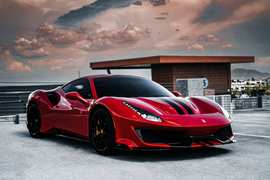 The Speedtail’s design is dictated by its primary objective: achieving high speeds while maintaining a degree of luxury and usability. The car features a revolutionary three-seat configuration, with the driver positioned in