



The quest for ultimate velocity has long captivated the automotive world, pushing engineering to its absolute limits. In 2026, the landscape of hypercars continues to evolve, driven by relentless innovation in powertrain technology, aerodynamics, and material science. While lap times and quarter-mile sprints offer valuable performance metrics, the raw allure of top speed remains the ultimate benchmark for automotive supremacy. It’s a realm where bragging rights are hard-won, and the pursuit of breaking barriers demands not only immense power but also the perfect alignment of road, machine, and nerve.
Unlike other performance indicators that can be optimized on a controlled track, setting a new top speed record is a monumental challenge. It requires finding an exceptionally long, flat stretch of pavement—a rarity in the modern world—and harnessing the brute force necessary to overcome aerodynamic drag at velocities approaching the speed of sound. This inherent difficulty explains why top speed records are seldom broken, each new benchmark representing a significant technological leap forward.
From the laboratories of legendary manufacturers in France, Sweden, and the United States, a new generation of hypercars is emerging, poised to redefine what’s possible on four wheels. These machines are not merely transportation; they are rolling sculptures of speed, meticulously engineered to slice through the air with minimal resistance while delivering earth-shattering acceleration. As we delve into the elite echelon of automotive performance, we present the definitive ranking of the fastest cars in the world as of 2026.
Rimac Nevera: The Electric Reign Continues at 258 MPH
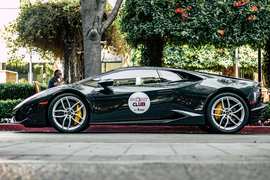 In the ever-evolving landscape of hypercars, the Rimac Nevera has firmly established itself as the benchmark for electric performance. Breaking away from the traditional V12 and W16 configurations that once dominated the top speed charts, this Croatian marvel proves that the future of ultimate velocity lies in electrification. The Nevera is not just fast; it is a technological tour de force, demonstrating that electric powertrains can deliver not only blistering acceleration but also headline-grabbing top speeds.
At its core, the Nevera is a testament to Mladen Rimac’s visionary engineering. The car’s powertrain is a symphony of four independent electric motors, each driving a single wheel. This configuration allows for an unprecedented level of torque vectoring, enabling the car to corner with surgical precision while simultaneously unleashing ferocious straight-line speed. The combined output of these electric motors is a staggering 1,914 horsepower and 1,740 lb-ft of torque, figures that would make even the most powerful gasoline engines blush.
But raw power is only part of the equation. The Nevera’s aerodynamic design is a masterclass in low-drag efficiency. Its sleek, flowing lines are not merely for aesthetics; they are meticulously sculpted to cheat the air, minimizing resistance as the car accelerates to its stratospheric velocities. The active aerodynamic elements, including the rear wing and underbody flaps, adjust in real-time to optimize downforce for cornering or reduce drag for top-speed runs.
When it comes to straight-line performance, the Nevera is simply untouchable. It rockets from 0 to 60 mph in a scarcely believable 1.85 seconds, a feat that rivals the acceleration of Formula 1 cars. The quarter-mile vanishes in just 8.6 seconds, with a trap speed of 163 mph. However, it is the top speed that places the Nevera at the pinnacle of current production hypercars. While some manufacturers have claimed higher theoretical top speeds, the Nevera holds the official Guinness World Record for the fastest production EV, with a verified top speed of 258 mph (415 km/h). This achievement was not a simple on-paper calculation but a real-world demonstration of its capabilities on a high-speed test track.
Beyond the headline numbers, the Nevera represents a paradigm shift in automotive philosophy. It proves that electric hypercars can deliver an exhilarating driving experience that rivals and, in many ways, surpasses their gasoline counterparts. The instant torque delivery provides a seamless surge of acceleration, while the lack of gear changes means the power delivery is relentless and unwavering. Furthermore, the Nevera’s sophisticated traction control systems allow drivers to explore its limits with confidence, making it one of the most accessible hypercars despite its extreme performance.
The development of the Nevera was a painstaking process, involving countless hours of simulation and real-world testing. Rimac engineers pushed the battery technology to its limits, developing a 120 kWh pack that can deliver sustained high power output without overheating. The cooling systems are a work of art, incorporating advanced thermal management to ensure that the motors and battery remain within optimal operating temperatures even during the most demanding high-speed runs.
As of 2026, the Nevera continues to be produced in limited numbers, with each vehicle being hand-built to exacting standards. The price tag reflects the exclusivity and engineering prowess of this machine, placing it firmly in the realm of the world’s most expensive and desirable automobiles. But for those who can afford it, the Nevera offers something truly unique: a glimpse into the future of high-performance motoring, where electric power reigns supreme and the pursuit of ultimate velocity knows no bounds.
SSC Tuatara: The American Challenger’s Record-Breaking Run
The SSC Tuatara represents the indomitable spirit of American hypercar engineering, a testament to what can be achieved with a bold vision and relentless dedication. Developed by Shelby SuperCars (SSC), this machine was born from a desire to reclaim the title of the world’s fastest production car, a crown that had long eluded American manufacturers. After a series of ambitious but ultimately controversial attempts, the Tuatara finally achieved a verified world record, etching its name into the annals of automotive history.
In the ever-evolving landscape of hypercars, the Rimac Nevera has firmly established itself as the benchmark for electric performance. Breaking away from the traditional V12 and W16 configurations that once dominated the top speed charts, this Croatian marvel proves that the future of ultimate velocity lies in electrification. The Nevera is not just fast; it is a technological tour de force, demonstrating that electric powertrains can deliver not only blistering acceleration but also headline-grabbing top speeds.
At its core, the Nevera is a testament to Mladen Rimac’s visionary engineering. The car’s powertrain is a symphony of four independent electric motors, each driving a single wheel. This configuration allows for an unprecedented level of torque vectoring, enabling the car to corner with surgical precision while simultaneously unleashing ferocious straight-line speed. The combined output of these electric motors is a staggering 1,914 horsepower and 1,740 lb-ft of torque, figures that would make even the most powerful gasoline engines blush.
But raw power is only part of the equation. The Nevera’s aerodynamic design is a masterclass in low-drag efficiency. Its sleek, flowing lines are not merely for aesthetics; they are meticulously sculpted to cheat the air, minimizing resistance as the car accelerates to its stratospheric velocities. The active aerodynamic elements, including the rear wing and underbody flaps, adjust in real-time to optimize downforce for cornering or reduce drag for top-speed runs.
When it comes to straight-line performance, the Nevera is simply untouchable. It rockets from 0 to 60 mph in a scarcely believable 1.85 seconds, a feat that rivals the acceleration of Formula 1 cars. The quarter-mile vanishes in just 8.6 seconds, with a trap speed of 163 mph. However, it is the top speed that places the Nevera at the pinnacle of current production hypercars. While some manufacturers have claimed higher theoretical top speeds, the Nevera holds the official Guinness World Record for the fastest production EV, with a verified top speed of 258 mph (415 km/h). This achievement was not a simple on-paper calculation but a real-world demonstration of its capabilities on a high-speed test track.
Beyond the headline numbers, the Nevera represents a paradigm shift in automotive philosophy. It proves that electric hypercars can deliver an exhilarating driving experience that rivals and, in many ways, surpasses their gasoline counterparts. The instant torque delivery provides a seamless surge of acceleration, while the lack of gear changes means the power delivery is relentless and unwavering. Furthermore, the Nevera’s sophisticated traction control systems allow drivers to explore its limits with confidence, making it one of the most accessible hypercars despite its extreme performance.
The development of the Nevera was a painstaking process, involving countless hours of simulation and real-world testing. Rimac engineers pushed the battery technology to its limits, developing a 120 kWh pack that can deliver sustained high power output without overheating. The cooling systems are a work of art, incorporating advanced thermal management to ensure that the motors and battery remain within optimal operating temperatures even during the most demanding high-speed runs.
As of 2026, the Nevera continues to be produced in limited numbers, with each vehicle being hand-built to exacting standards. The price tag reflects the exclusivity and engineering prowess of this machine, placing it firmly in the realm of the world’s most expensive and desirable automobiles. But for those who can afford it, the Nevera offers something truly unique: a glimpse into the future of high-performance motoring, where electric power reigns supreme and the pursuit of ultimate velocity knows no bounds.
SSC Tuatara: The American Challenger’s Record-Breaking Run
The SSC Tuatara represents the indomitable spirit of American hypercar engineering, a testament to what can be achieved with a bold vision and relentless dedication. Developed by Shelby SuperCars (SSC), this machine was born from a desire to reclaim the title of the world’s fastest production car, a crown that had long eluded American manufacturers. After a series of ambitious but ultimately controversial attempts, the Tuatara finally achieved a verified world record, etching its name into the annals of automotive history.
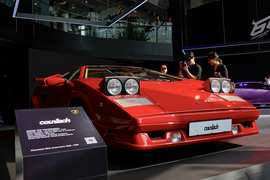 At the heart of the Tuatara lies a monstrous 5.9-liter twin-turbocharged V8 engine, a powerplant that delivers a staggering 1,750 horsepower on E85 fuel. This engine is not merely a high-performance unit; it is a work of mechanical art, meticulously engineered to deliver power across a broad rev range. The twin-turbo setup provides a seamless surge of acceleration, eliminating the lag often associated with forced induction systems. The engine is mated to a seven-speed CIMA dual-clutch transmission, which has been optimized to handle the immense torque and deliver lightning-fast gear changes.
The Tuatara’s design is a masterclass in aerodynamic optimization. SSC’s aerodynamicist, Jason Castriota, penned a shape that is both visually stunning and aerodynamically brilliant. The car boasts a drag coefficient of just 0.279, a figure that is exceptional for a vehicle designed to produce significant downforce. The active aerodynamics play a crucial role in achieving this balance, with the rear wing adjusting its angle to optimize downforce for cornering and reduce drag for high-speed runs. The car’s sleek, elongated profile allows it to slice through the air with minimal resistance, a critical factor in achieving its stratospheric top speeds.
The journey to a verified world record was not without its challenges. SSC’s initial attempt in 2020 was marred by controversy when claims of a 316 mph (509 km/h) average speed were questioned due to inconsistencies in the data. This led to a period of reflection and recalibration for the company. Rather than abandoning their quest, SSC doubled down, conducting a more rigorous and transparent testing protocol.
In January 2021, SSC returned to the Kennedy Space Center’s Space Florida’s Shuttle Landing Facility, the same location as their earlier attempt. This time, with a production-spec car and a carefully monitored test, they achieved a verified two-way average speed of 282.9 mph (455.3 km/h). While this was a remarkable achievement, it was still short of their ultimate goal. However, SSC wasn’t finished.
The most definitive demonstration of the Tuatara’s capabilities came in May 2022, on a closed highway in Florida. Under optimal conditions, with a production car and professional driver Larry Caplin at the helm, the Tuatara reached an astonishing one-way speed of 295 mph (474.8 km/h). While a two-way average is required for official record purposes, this single run demonstrated the Tuatara’s potential to challenge the very limits of automotive performance. SSC has since conducted further tests, refining the car’s setup and aiming for an official two-way record that could surpass 300 mph.
Beyond the headline numbers, the Tuatara represents a triumph of persistence. It demonstrates that with enough determination and engineering expertise, American manufacturers can compete at the highest echelons of the hypercar world. The car’s limited production run ensures its exclusivity, with each vehicle being a bespoke creation tailored to the owner’s preferences. The interior is a blend of luxury and performance, featuring premium materials and advanced technology while maintaining a driver-focused cockpit.
As of 2026, the SSC Tuatara continues to be a formidable presence in the hypercar landscape. While Bugatti and Koenigsegg may have held the spotlight in previous years, the Tuatara has firmly established itself as a legitimate contender for the title of the world’s fastest production car. Its combination of brute force, aerodynamic brilliance, and American ingenuity makes it one of the most compelling hypercars ever built. The ongoing pursuit of the 300 mph barrier ensures that the Tuatara will remain a topic of conversation in the automotive world for years to come.
Bugatti Chiron Super Sport 300+: Breaking the 300 MPH Barrier
At the heart of the Tuatara lies a monstrous 5.9-liter twin-turbocharged V8 engine, a powerplant that delivers a staggering 1,750 horsepower on E85 fuel. This engine is not merely a high-performance unit; it is a work of mechanical art, meticulously engineered to deliver power across a broad rev range. The twin-turbo setup provides a seamless surge of acceleration, eliminating the lag often associated with forced induction systems. The engine is mated to a seven-speed CIMA dual-clutch transmission, which has been optimized to handle the immense torque and deliver lightning-fast gear changes.
The Tuatara’s design is a masterclass in aerodynamic optimization. SSC’s aerodynamicist, Jason Castriota, penned a shape that is both visually stunning and aerodynamically brilliant. The car boasts a drag coefficient of just 0.279, a figure that is exceptional for a vehicle designed to produce significant downforce. The active aerodynamics play a crucial role in achieving this balance, with the rear wing adjusting its angle to optimize downforce for cornering and reduce drag for high-speed runs. The car’s sleek, elongated profile allows it to slice through the air with minimal resistance, a critical factor in achieving its stratospheric top speeds.
The journey to a verified world record was not without its challenges. SSC’s initial attempt in 2020 was marred by controversy when claims of a 316 mph (509 km/h) average speed were questioned due to inconsistencies in the data. This led to a period of reflection and recalibration for the company. Rather than abandoning their quest, SSC doubled down, conducting a more rigorous and transparent testing protocol.
In January 2021, SSC returned to the Kennedy Space Center’s Space Florida’s Shuttle Landing Facility, the same location as their earlier attempt. This time, with a production-spec car and a carefully monitored test, they achieved a verified two-way average speed of 282.9 mph (455.3 km/h). While this was a remarkable achievement, it was still short of their ultimate goal. However, SSC wasn’t finished.
The most definitive demonstration of the Tuatara’s capabilities came in May 2022, on a closed highway in Florida. Under optimal conditions, with a production car and professional driver Larry Caplin at the helm, the Tuatara reached an astonishing one-way speed of 295 mph (474.8 km/h). While a two-way average is required for official record purposes, this single run demonstrated the Tuatara’s potential to challenge the very limits of automotive performance. SSC has since conducted further tests, refining the car’s setup and aiming for an official two-way record that could surpass 300 mph.
Beyond the headline numbers, the Tuatara represents a triumph of persistence. It demonstrates that with enough determination and engineering expertise, American manufacturers can compete at the highest echelons of the hypercar world. The car’s limited production run ensures its exclusivity, with each vehicle being a bespoke creation tailored to the owner’s preferences. The interior is a blend of luxury and performance, featuring premium materials and advanced technology while maintaining a driver-focused cockpit.
As of 2026, the SSC Tuatara continues to be a formidable presence in the hypercar landscape. While Bugatti and Koenigsegg may have held the spotlight in previous years, the Tuatara has firmly established itself as a legitimate contender for the title of the world’s fastest production car. Its combination of brute force, aerodynamic brilliance, and American ingenuity makes it one of the most compelling hypercars ever built. The ongoing pursuit of the 300 mph barrier ensures that the Tuatara will remain a topic of conversation in the automotive world for years to come.
Bugatti Chiron Super Sport 300+: Breaking the 300 MPH Barrier
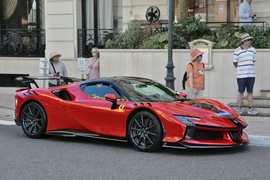 In the hypercar realm, few names carry the