



The Apex Predators: A Deep Dive into the World’s 10 Fastest Supercars of 2026
Welcome to an arena where the entry requirement isn’t a driver’s license, but a willingness to flirt with the edge of physics. In the rarified atmosphere of hypercar ownership, a top speed of 200 mph is merely the baseline, the warm-up act before the main event. This is a domain where limited-edition machines are commissioned by billionaire collectors like bespoke Savile Row suits—unique, exclusive, and valued less as transportation and more as rolling sculpture. The perennial question lingers: will the custodians of these million-dollar marvels ever dare to unleash their full potential on a circuit, or will they remain pristine exhibits in climate-controlled garages? As industry veterans who’ve spent a decade analyzing these apex predators, we know our answer: these machines were built to be driven, to be felt, to be experienced at the very limit of their capabilities.
The landscape of extreme performance has shifted dramatically in the last few years. What was once the exclusive domain of internal combustion engines is now being challenged—and in some cases, surpassed—by the silent, electrifying force of battery power. The traditional supercar narrative, defined by the howl of a V12 or the scream of a turbo V8, is being rewritten with silicon chips and electric motors. Yet, even as technology evolves, the core values of the supercar—design purity, engineering audacity, and the visceral thrill of speed—remain immutable. Join us as we dissect the mechanical masterpieces that define the cutting edge of automotive performance in 2026.
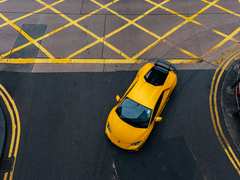 The Rimac Nevera: Electrifying the Hypercar Hierarchy
When the topic of the world’s fastest supercars arises, the conversation inevitably gravitates towards the traditional European marques. However, the seismic shift in the automotive industry has been spearheaded by a relative newcomer from Croatia. The Rimac Nevera is not just a car; it is a declaration of independence from the combustion engine. Named after Mediterranean storms that lash the Croatian coast, the Nevera embodies untamed power and precision engineering.
At the heart of this electric behemoth lies a quad-motor setup, with each wheel independently driven by its own electric motor. This configuration enables an unprecedented level of torque vectoring, allowing the car to adjust power delivery to each wheel thousands of times per second. This isn’t just about straight-line speed; it’s about cornering ability that defies conventional physics. The Nevera’s telemetry system, developed with insights from Formula 1 engineers, constantly monitors driving inputs and adjusts the car’s dynamics to maintain optimal grip and stability.
The headline figures are staggering. The Nevera boasts a total output of 1,914 horsepower and 1,741 lb-ft of torque, allowing it to rocket from 0 to 60 mph in a scarcely believable 1.74 seconds. But the true measure of its performance prowess is its top speed: a verified 258 mph. This places the Nevera firmly at the pinnacle of production car performance, challenging the established order and setting a new benchmark for electric hypercars. The interior, crafted from premium materials like Alcantara and carbon fiber, offers a blend of luxury and minimalism, ensuring that the driver remains the focal point. The only downside? The sticker price of around $2.4 million, which places it firmly in the realm of the ultra-wealthy. But for those who can afford it, the Nevera offers a driving experience that is simply unparalleled in the automotive world.
The Zenvo TSR-S: Danish Ingenuity Meets Track Dominance
From the rugged coastline of Denmark emerges a machine that defies convention in every conceivable way. The Zenvo TSR-S is the brainchild of Christian von Koenigsegg’s former chief engineer, and it carries the same DNA of obsessive engineering and boundary-pushing innovation that defines the hypercar elite. Unlike the electric onslaught of the Nevera, the TSR-S remains fiercely loyal to the internal combustion engine, albeit with a significant technological twist.
The heart of the TSR-S is a twin-supercharged V8 engine, producing a staggering 1,200 horsepower. But the true genius of the Zenvo lies in its transmission. It features a unique helical-cut gearbox that allows for incredibly fast gear changes, enabling the car to accelerate with relentless ferocity. The most striking feature, however, is the ‘De-Activated Centrifugal Wing’—a revolutionary rear wing that can pivot and tilt independently, acting as an air brake during deceleration and providing aerodynamic assistance during cornering. This active aero system allows the TSR-S to generate more downforce than a Formula 1 car, enabling it to maintain incredible speeds through corners where lesser cars would simply lift off.
The driving experience is nothing short of visceral. The roar of the supercharged V8 is a primal symphony, a mechanical ballet of combustion and compression that sends shivers down the spine. The manual gearbox option further enhances the connection between driver and machine, offering a level of engagement that is increasingly rare in the age of paddle shifters and automated transmissions. The interior is a blend of bespoke luxury and race-car functionality, with hand-stitched leather seats, carbon fiber trim, and a digital instrument cluster that displays vital performance data in a clear and concise manner. At $1.6 million, the TSR-S is a statement piece, a testament to the enduring appeal of the analog driving experience in a digital world.
The Ferrari Daytona SP3: A Modern Interpretation of La Dolce Vita
The Rimac Nevera: Electrifying the Hypercar Hierarchy
When the topic of the world’s fastest supercars arises, the conversation inevitably gravitates towards the traditional European marques. However, the seismic shift in the automotive industry has been spearheaded by a relative newcomer from Croatia. The Rimac Nevera is not just a car; it is a declaration of independence from the combustion engine. Named after Mediterranean storms that lash the Croatian coast, the Nevera embodies untamed power and precision engineering.
At the heart of this electric behemoth lies a quad-motor setup, with each wheel independently driven by its own electric motor. This configuration enables an unprecedented level of torque vectoring, allowing the car to adjust power delivery to each wheel thousands of times per second. This isn’t just about straight-line speed; it’s about cornering ability that defies conventional physics. The Nevera’s telemetry system, developed with insights from Formula 1 engineers, constantly monitors driving inputs and adjusts the car’s dynamics to maintain optimal grip and stability.
The headline figures are staggering. The Nevera boasts a total output of 1,914 horsepower and 1,741 lb-ft of torque, allowing it to rocket from 0 to 60 mph in a scarcely believable 1.74 seconds. But the true measure of its performance prowess is its top speed: a verified 258 mph. This places the Nevera firmly at the pinnacle of production car performance, challenging the established order and setting a new benchmark for electric hypercars. The interior, crafted from premium materials like Alcantara and carbon fiber, offers a blend of luxury and minimalism, ensuring that the driver remains the focal point. The only downside? The sticker price of around $2.4 million, which places it firmly in the realm of the ultra-wealthy. But for those who can afford it, the Nevera offers a driving experience that is simply unparalleled in the automotive world.
The Zenvo TSR-S: Danish Ingenuity Meets Track Dominance
From the rugged coastline of Denmark emerges a machine that defies convention in every conceivable way. The Zenvo TSR-S is the brainchild of Christian von Koenigsegg’s former chief engineer, and it carries the same DNA of obsessive engineering and boundary-pushing innovation that defines the hypercar elite. Unlike the electric onslaught of the Nevera, the TSR-S remains fiercely loyal to the internal combustion engine, albeit with a significant technological twist.
The heart of the TSR-S is a twin-supercharged V8 engine, producing a staggering 1,200 horsepower. But the true genius of the Zenvo lies in its transmission. It features a unique helical-cut gearbox that allows for incredibly fast gear changes, enabling the car to accelerate with relentless ferocity. The most striking feature, however, is the ‘De-Activated Centrifugal Wing’—a revolutionary rear wing that can pivot and tilt independently, acting as an air brake during deceleration and providing aerodynamic assistance during cornering. This active aero system allows the TSR-S to generate more downforce than a Formula 1 car, enabling it to maintain incredible speeds through corners where lesser cars would simply lift off.
The driving experience is nothing short of visceral. The roar of the supercharged V8 is a primal symphony, a mechanical ballet of combustion and compression that sends shivers down the spine. The manual gearbox option further enhances the connection between driver and machine, offering a level of engagement that is increasingly rare in the age of paddle shifters and automated transmissions. The interior is a blend of bespoke luxury and race-car functionality, with hand-stitched leather seats, carbon fiber trim, and a digital instrument cluster that displays vital performance data in a clear and concise manner. At $1.6 million, the TSR-S is a statement piece, a testament to the enduring appeal of the analog driving experience in a digital world.
The Ferrari Daytona SP3: A Modern Interpretation of La Dolce Vita
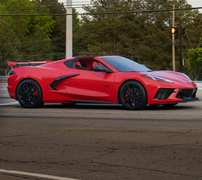 No discussion of the world’s fastest supercars would be complete without an homage to the Prancing Horse. Ferrari, the marque synonymous with automotive excellence, has once again graced the world with a masterpiece that seamlessly blends its storied racing heritage with cutting-edge technology. The Daytona SP3 is a breathtaking tribute to the legendary 330 P3/4 race cars that dominated the 1967 24 Hours of Daytona, securing a historic 1-2-3 finish for the Maranello marque.
At the heart of the SP3 lies a naturally aspirated 6.5-liter V12 engine, derived from the F12 TDF. This glorious powerplant produces 829 horsepower and revs to a dizzying 9,500 rpm, delivering a soundtrack that is pure, unadulterated Ferrari. The SP3 channels its power to the rear wheels through a rapid-shifting dual-clutch transmission, enabling a 0-60 mph time of around 2.8 seconds and a top speed of 211 mph. While these figures may not match the outright numbers of some of its electric rivals, the SP3 offers a driving experience that is arguably more rewarding, thanks to its linear power delivery and the visceral connection between driver and engine.
The design is a triumph of aerodynamic artistry. The flowing lines and muscular haunches are a direct callback to the golden era of sports car racing, yet the execution is unmistakably modern. The low-slung profile, dramatic curves, and intricate aero details create a silhouette that is both timeless and contemporary. The interior is a luxurious cockpit designed for the ultimate driving experience, with sculpted carbon fiber seats, premium leather upholstery, and a driver-focused dashboard that puts all essential controls within easy reach. With a price tag of around $2.2 million, the Daytona SP3 is a collector’s item, a rolling piece of history that embodies the very essence of La Dolce Vita.
The Aston Martin Valkyrie: Formula 1 Technology for the Road
Aston Martin’s foray into the world of hypercars has resulted in a machine that blurs the line between road car and race car. The Valkyrie, a product of collaboration with the Red Bull Racing Formula 1 team and their legendary designer Adrian Newey, is the epitome of British engineering excellence. It is a car born from the track, designed to deliver a Formula 1-like experience to the road.
At the heart of the Valkyrie lies a Cosworth-designed 6.5-liter naturally aspirated V12 engine, augmented by an electric hybrid system. This potent combination produces a staggering 1,160 horsepower, allowing the Valkyrie to accelerate from 0 to 60 mph in a breathtaking 2.5 seconds and reach a top speed of 220 mph. But the Valkyrie’s true genius lies in its aerodynamic efficiency. The car’s design is a masterclass in airflow management, with a massive undertray and advanced aero elements that generate an incredible amount of downforce, allowing the car to corner at speeds that would be impossible for conventional vehicles.
The interior is a minimalist, race-inspired cockpit. The seats are sculpted directly into the carbon fiber monocoque, providing a snug, race-car fit. The steering wheel is a rectangular, F1-inspired unit, and the dashboard is dominated by a digital display that provides all essential driving information. The lack of creature comforts—no infotainment system, no climate control, no sound deadening—is a deliberate choice, ensuring that the driver remains fully immersed in the driving experience. At around $3 million, the Valkyrie is not just a car; it is a statement of intent, a testament to the power of collaboration between road car manufacturers and Formula 1 teams.
The Gordon Murray Automotive T.50: A Masterclass in Analogue Performance
No discussion of the world’s fastest supercars would be complete without an homage to the Prancing Horse. Ferrari, the marque synonymous with automotive excellence, has once again graced the world with a masterpiece that seamlessly blends its storied racing heritage with cutting-edge technology. The Daytona SP3 is a breathtaking tribute to the legendary 330 P3/4 race cars that dominated the 1967 24 Hours of Daytona, securing a historic 1-2-3 finish for the Maranello marque.
At the heart of the SP3 lies a naturally aspirated 6.5-liter V12 engine, derived from the F12 TDF. This glorious powerplant produces 829 horsepower and revs to a dizzying 9,500 rpm, delivering a soundtrack that is pure, unadulterated Ferrari. The SP3 channels its power to the rear wheels through a rapid-shifting dual-clutch transmission, enabling a 0-60 mph time of around 2.8 seconds and a top speed of 211 mph. While these figures may not match the outright numbers of some of its electric rivals, the SP3 offers a driving experience that is arguably more rewarding, thanks to its linear power delivery and the visceral connection between driver and engine.
The design is a triumph of aerodynamic artistry. The flowing lines and muscular haunches are a direct callback to the golden era of sports car racing, yet the execution is unmistakably modern. The low-slung profile, dramatic curves, and intricate aero details create a silhouette that is both timeless and contemporary. The interior is a luxurious cockpit designed for the ultimate driving experience, with sculpted carbon fiber seats, premium leather upholstery, and a driver-focused dashboard that puts all essential controls within easy reach. With a price tag of around $2.2 million, the Daytona SP3 is a collector’s item, a rolling piece of history that embodies the very essence of La Dolce Vita.
The Aston Martin Valkyrie: Formula 1 Technology for the Road
Aston Martin’s foray into the world of hypercars has resulted in a machine that blurs the line between road car and race car. The Valkyrie, a product of collaboration with the Red Bull Racing Formula 1 team and their legendary designer Adrian Newey, is the epitome of British engineering excellence. It is a car born from the track, designed to deliver a Formula 1-like experience to the road.
At the heart of the Valkyrie lies a Cosworth-designed 6.5-liter naturally aspirated V12 engine, augmented by an electric hybrid system. This potent combination produces a staggering 1,160 horsepower, allowing the Valkyrie to accelerate from 0 to 60 mph in a breathtaking 2.5 seconds and reach a top speed of 220 mph. But the Valkyrie’s true genius lies in its aerodynamic efficiency. The car’s design is a masterclass in airflow management, with a massive undertray and advanced aero elements that generate an incredible amount of downforce, allowing the car to corner at speeds that would be impossible for conventional vehicles.
The interior is a minimalist, race-inspired cockpit. The seats are sculpted directly into the carbon fiber monocoque, providing a snug, race-car fit. The steering wheel is a rectangular, F1-inspired unit, and the dashboard is dominated by a digital display that provides all essential driving information. The lack of creature comforts—no infotainment system, no climate control, no sound deadening—is a deliberate choice, ensuring that the driver remains fully immersed in the driving experience. At around $3 million, the Valkyrie is not just a car; it is a statement of intent, a testament to the power of collaboration between road car manufacturers and Formula 1 teams.
The Gordon Murray Automotive T.50: A Masterclass in Analogue Performance
 In an era dominated by electrification and automated driving systems, the Gordon Murray Automotive T.50 stands as a defiant beacon of analogue performance. Designed by the legendary Gordon Murray, the visionary behind the McLaren F1, the T.50 is a return to the purity of the driving experience. This is a car that prioritizes driver engagement above all else, offering