



The 2026 Hypercar Hierarchy: A Deep Dive into the World’s Fastest Machines
Welcome to the elite echelon of automotive performance, where the term “fast” takes on an entirely new dimension. In the rarefied atmosphere of the hypercar industry, speeds that would qualify as outright terrifying for most drivers are merely the entry fee. We’re not just talking about sports cars; we’re discussing rolling sculptures of carbon fiber and cutting-edge engineering, often with price tags that rival the GDP of small nations. These machines blur the lines between road legality and track-dominating intent, leaving traditional supercars in their dust. The question lingering in the minds of enthusiasts and collectors worldwide is no longer if these cars are fast, but rather, how fast is fast enough when the pursuit of the ultimate top speed pushes the boundaries of physics itself?
The global market in 2026 continues to be dominated by a fascinating duality: the established European aristocracy like Ferrari and Bugatti, fiercely guarding their legacies, and the radical disruptors from smaller markets—think Rimac from Croatia and Zenvo from Denmark—who are rewriting the rulebook with electric power and audacious engineering. This annual ranking serves as the definitive barometer of automotive supremacy, scrutinizing the technical specifications, the exclusivity factor, and yes, the sheer audaciousness of each manufacturer’s offering. As we navigate this landscape of multi-million dollar marvels, one thing becomes abundantly clear: the 2026 list is perhaps the most electrifying yet, as the internal combustion engine faces its swansong against the relentless torque of the electric motor.
 To be considered for this pantheon, a vehicle must possess more than just a high top speed. It must embody a certain je ne sais quoi—a blend of breathtaking design, revolutionary technology, and scarcity that borders on the mythical. We’ve witnessed the industry shift dramatically over the past decade, with hybrid powertrains becoming the norm rather than the exception, and fully electric hypercars finally shedding their “concept car” status to become legitimate contenders for the title of the fastest production car in the world. This evolution is reshaping not only the performance metrics but also the very definition of what a supercar can be.
Let’s accelerate through the ranks and explore the ten titans of speed that define automotive excellence in 2026.
Zenvo TSR-S: The Danish Track Terror
Emerging from the Danish ingenuity of Zenvo Automotive, the TSR-S represents a fascinating intersection of extreme track performance and road legality. This is a machine born from a philosophy that eschews convention in favor of raw, unfiltered aggression. The secret to its blistering pace lies not just in its robust V8 heart, but in a suite of aerodynamic features that appear almost alien in their complexity.
The most striking element of the TSR-S is its massive rear wing. Unlike the static spoilers of yesteryear, this wing is dynamically active, capable of tilting to generate enormous downforce during cornering—effectively hugging the track—and then acting as a colossal air brake for deceleration. It’s a visual spectacle and a technical marvel rolled into one. Underpinning this aerodynamic wizardry is a bespoke V8 engine equipped with not one, but two centrifugal superchargers. This forced induction setup ensures that power delivery is instantaneous and brutal, thrusting the car forward with the ferocity of a fighter jet.
While Zenvo officially lists the top speed as electronically limited to 202 mph, industry insiders and track testing data suggest that with the limiter removed, the TSR-S is capable of significantly higher velocities. However, the company’s focus on track usability and driver engagement—evidenced by its sequential manual gearbox that allows for satisfying heel-and-toe downshifts—means that outright top speed is secondary to lap time performance. For the discerning collector with £1.3 million to spare, the TSR-S offers a visceral, mechanical experience that is increasingly rare in the modern era of autonomous driving features and sanitized performance. It is a testament to the fact that sometimes, the most exhilarating machines come from the least expected corners of the automotive world.
Ferrari Daytona SP3: A Timeless Masterpiece
No discussion of the world’s fastest and most desirable supercars is complete without acknowledging the enduring legacy of Ferrari. In 2026, the Italian marque continues to dominate the conversation, not just with outright speed, but with vehicles that blend breathtaking beauty with motorsport heritage. The Daytona SP3 is a prime example of this philosophy, a mid-engined marvel that serves as a poignant tribute to Ferrari’s legendary 1-2-3 podium sweep at the 24 Hours of Daytona in 1967.
The design language of the SP3 is a masterclass in retro-futurism. It pays homage to the iconic sports prototypes of the late 1960s with flowing lines, muscular haunches, and a low-slung, aggressive stance. Yet, beneath this evocative exterior beats the heart of a modern beast. The SP3 is powered by Ferrari’s last naturally aspirated V12 engine, a naturally-aspirated 6.5-litre unit that produces a staggering 829 bhp. This engine, devoid of turbochargers or hybrid assistance, delivers a symphonic experience—a visceral, mechanical soundtrack that is rapidly becoming extinct.
To be considered for this pantheon, a vehicle must possess more than just a high top speed. It must embody a certain je ne sais quoi—a blend of breathtaking design, revolutionary technology, and scarcity that borders on the mythical. We’ve witnessed the industry shift dramatically over the past decade, with hybrid powertrains becoming the norm rather than the exception, and fully electric hypercars finally shedding their “concept car” status to become legitimate contenders for the title of the fastest production car in the world. This evolution is reshaping not only the performance metrics but also the very definition of what a supercar can be.
Let’s accelerate through the ranks and explore the ten titans of speed that define automotive excellence in 2026.
Zenvo TSR-S: The Danish Track Terror
Emerging from the Danish ingenuity of Zenvo Automotive, the TSR-S represents a fascinating intersection of extreme track performance and road legality. This is a machine born from a philosophy that eschews convention in favor of raw, unfiltered aggression. The secret to its blistering pace lies not just in its robust V8 heart, but in a suite of aerodynamic features that appear almost alien in their complexity.
The most striking element of the TSR-S is its massive rear wing. Unlike the static spoilers of yesteryear, this wing is dynamically active, capable of tilting to generate enormous downforce during cornering—effectively hugging the track—and then acting as a colossal air brake for deceleration. It’s a visual spectacle and a technical marvel rolled into one. Underpinning this aerodynamic wizardry is a bespoke V8 engine equipped with not one, but two centrifugal superchargers. This forced induction setup ensures that power delivery is instantaneous and brutal, thrusting the car forward with the ferocity of a fighter jet.
While Zenvo officially lists the top speed as electronically limited to 202 mph, industry insiders and track testing data suggest that with the limiter removed, the TSR-S is capable of significantly higher velocities. However, the company’s focus on track usability and driver engagement—evidenced by its sequential manual gearbox that allows for satisfying heel-and-toe downshifts—means that outright top speed is secondary to lap time performance. For the discerning collector with £1.3 million to spare, the TSR-S offers a visceral, mechanical experience that is increasingly rare in the modern era of autonomous driving features and sanitized performance. It is a testament to the fact that sometimes, the most exhilarating machines come from the least expected corners of the automotive world.
Ferrari Daytona SP3: A Timeless Masterpiece
No discussion of the world’s fastest and most desirable supercars is complete without acknowledging the enduring legacy of Ferrari. In 2026, the Italian marque continues to dominate the conversation, not just with outright speed, but with vehicles that blend breathtaking beauty with motorsport heritage. The Daytona SP3 is a prime example of this philosophy, a mid-engined marvel that serves as a poignant tribute to Ferrari’s legendary 1-2-3 podium sweep at the 24 Hours of Daytona in 1967.
The design language of the SP3 is a masterclass in retro-futurism. It pays homage to the iconic sports prototypes of the late 1960s with flowing lines, muscular haunches, and a low-slung, aggressive stance. Yet, beneath this evocative exterior beats the heart of a modern beast. The SP3 is powered by Ferrari’s last naturally aspirated V12 engine, a naturally-aspirated 6.5-litre unit that produces a staggering 829 bhp. This engine, devoid of turbochargers or hybrid assistance, delivers a symphonic experience—a visceral, mechanical soundtrack that is rapidly becoming extinct.
 With a projected top speed of 211 mph, the Daytona SP3 is blisteringly fast. However, its true value lies not in its absolute velocity, but in its emotional impact. It is a car designed to be savored, to be driven on scenic coastal roads where its beauty can be appreciated at legal speeds. The interior is a minimalist, driver-focused cocoon, deliberately eschewing excessive technology to maintain a pure driving connection. Priced at approximately £1.8 million, the SP3 is an exercise in exclusivity and nostalgia. It represents the zenith of Ferrari’s V12 era, a farewell to an engine configuration that defined the brand for over seven decades. For those who value heritage, design purity, and the inimitable character of a naturally aspirated V12, the Daytona SP3 stands as a timeless masterpiece in the ever-evolving landscape of the supercar.
Ford GT Mk IV: America’s Le Mans Legend Reborn
The Ford GT is more than just a supercar; it is a symbol of American sporting prowess, a four-wheeled embodiment of the David versus Goliath battles fought at the 24 Hours of Le Mans in the 1960s. The Mk IV, a reborn iteration of the legendary 1967 Le Mans winner, represents the latest chapter in this storied saga. While the original GT40 was a product of necessity and ingenuity, the 2023-era Mk IV is a testament to Ford’s unwavering commitment to performance engineering and track dominance.
This latest iteration takes the GT’s race-proven formula and pushes it to its absolute zenith. Eschewing road legality for the pure pursuit of speed, the Mk IV is a strictly track-only machine, designed to devour asphalt with savage efficiency. Its aerodynamic package is a work of art, featuring a dramatic long-tail design that generates colossal downforce, ensuring the car remains glued to the track even at its dizzying velocities. Under the skin lies a potent, race-spec EcoBoost V6 engine, enhanced with bespoke components to produce well over 800 horsepower.
The design itself is a masterful blend of heritage and modernity. While it pays overt homage to the classic 1967 Mk IV with its distinctive shape and proportions, it incorporates cutting-edge materials like carbon fiber and titanium to achieve a level of performance that the original could only dream of. Ford’s decision to produce only 67 examples—a direct nod to the year of the original’s triumph—underscores the car’s legendary status. With a projected top speed hovering around 218 mph, the GT Mk IV is a force to be reckoned with on any circuit. Its price tag of approximately £1.3 million positions it firmly in the realm of the ultra-exclusive. More than just a car, the Ford GT Mk IV is a statement—a declaration that American engineering, rooted in a rich motorsport legacy, can still compete with the best the world has to offer. It is a fitting tribute to a golden era of racing, reimagined for the modern era.
Pininfarina Battista: The Electric Art Piece
In 2026, the automotive landscape is being reshaped by the inexorable rise of electric power, and nowhere is this transformation more beautifully realized than in the Pininfarina Battista. This all-electric hypercar represents the maiden voyage of the legendary Italian design house into the world of standalone vehicle manufacturing. For decades, Pininfarina has been the creative force behind some of the most beautiful cars ever conceived, styling the likes of Ferrari and Maserati. Now, the company has lent its name to a creation that is as much a work of art as it is a technological marvel.
The Battista is a pure electric delight, a testament to the potential of electrification when combined with Italian design flair. It eschews the aggressive, angular styling often associated with electric hypercars in favor of a more organic, flowing aesthetic. The silhouette is pure elegance, with sinuous lines that seem to have been sculpted by the wind itself. This attention to detail extends to every facet of the car, from the intricate headlight design to the seamless integration of the active rear wing.
With a projected top speed of 211 mph, the Daytona SP3 is blisteringly fast. However, its true value lies not in its absolute velocity, but in its emotional impact. It is a car designed to be savored, to be driven on scenic coastal roads where its beauty can be appreciated at legal speeds. The interior is a minimalist, driver-focused cocoon, deliberately eschewing excessive technology to maintain a pure driving connection. Priced at approximately £1.8 million, the SP3 is an exercise in exclusivity and nostalgia. It represents the zenith of Ferrari’s V12 era, a farewell to an engine configuration that defined the brand for over seven decades. For those who value heritage, design purity, and the inimitable character of a naturally aspirated V12, the Daytona SP3 stands as a timeless masterpiece in the ever-evolving landscape of the supercar.
Ford GT Mk IV: America’s Le Mans Legend Reborn
The Ford GT is more than just a supercar; it is a symbol of American sporting prowess, a four-wheeled embodiment of the David versus Goliath battles fought at the 24 Hours of Le Mans in the 1960s. The Mk IV, a reborn iteration of the legendary 1967 Le Mans winner, represents the latest chapter in this storied saga. While the original GT40 was a product of necessity and ingenuity, the 2023-era Mk IV is a testament to Ford’s unwavering commitment to performance engineering and track dominance.
This latest iteration takes the GT’s race-proven formula and pushes it to its absolute zenith. Eschewing road legality for the pure pursuit of speed, the Mk IV is a strictly track-only machine, designed to devour asphalt with savage efficiency. Its aerodynamic package is a work of art, featuring a dramatic long-tail design that generates colossal downforce, ensuring the car remains glued to the track even at its dizzying velocities. Under the skin lies a potent, race-spec EcoBoost V6 engine, enhanced with bespoke components to produce well over 800 horsepower.
The design itself is a masterful blend of heritage and modernity. While it pays overt homage to the classic 1967 Mk IV with its distinctive shape and proportions, it incorporates cutting-edge materials like carbon fiber and titanium to achieve a level of performance that the original could only dream of. Ford’s decision to produce only 67 examples—a direct nod to the year of the original’s triumph—underscores the car’s legendary status. With a projected top speed hovering around 218 mph, the GT Mk IV is a force to be reckoned with on any circuit. Its price tag of approximately £1.3 million positions it firmly in the realm of the ultra-exclusive. More than just a car, the Ford GT Mk IV is a statement—a declaration that American engineering, rooted in a rich motorsport legacy, can still compete with the best the world has to offer. It is a fitting tribute to a golden era of racing, reimagined for the modern era.
Pininfarina Battista: The Electric Art Piece
In 2026, the automotive landscape is being reshaped by the inexorable rise of electric power, and nowhere is this transformation more beautifully realized than in the Pininfarina Battista. This all-electric hypercar represents the maiden voyage of the legendary Italian design house into the world of standalone vehicle manufacturing. For decades, Pininfarina has been the creative force behind some of the most beautiful cars ever conceived, styling the likes of Ferrari and Maserati. Now, the company has lent its name to a creation that is as much a work of art as it is a technological marvel.
The Battista is a pure electric delight, a testament to the potential of electrification when combined with Italian design flair. It eschews the aggressive, angular styling often associated with electric hypercars in favor of a more organic, flowing aesthetic. The silhouette is pure elegance, with sinuous lines that seem to have been sculpted by the wind itself. This attention to detail extends to every facet of the car, from the intricate headlight design to the seamless integration of the active rear wing.
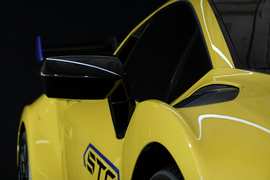 Beneath the captivating exterior lies a powertrain of extraordinary capability. The Battista is equipped with four independent electric motors, one powering each wheel, delivering a combined output of over 1,900 horsepower. This all-wheel-drive system, managed by a sophisticated torque-vectoring algorithm, ensures that power is deployed with surgical precision. The