



The Supercar Speed Wars of 2026: A Deep Dive into the World’s Fastest Machines
In 2026, the hypercar landscape has reached a fever pitch of technological innovation and extreme performance. Where 200 mph was once the benchmark of automotive supremacy, it is now merely the entry fee for entry into this rarefied echelon of engineering. The world’s fastest supercars represent the zenith of human ingenuity, pushing the boundaries of aerodynamics, materials science, and powertrain technology. These multi-million-dollar machines are more than just vehicles; they are rolling sculptures, exclusive collector’s items, and testbeds for the next generation of automotive advancements. Yet, the question remains: in a world where a 2,000-hp hybrid hypercar can out-accelerate a dragster, how fast is fast enough? This article delves into the crème de la crème of the automotive world, exploring the top 10 fastest supercars that are redefining speed in 2026.
Bugatti Bolide: The Track-Focused Apex Predator
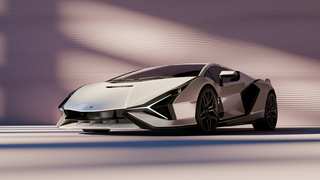 Kicking off our countdown is a machine that embodies the very essence of automotive excess: the Bugatti Bolide. This track-only leviathan is the final hurrah for Bugatti’s legendary 8.0-liter W16 engine, tuned to produce a staggering 1,824 horsepower in its most aggressive configuration. The design of the Bolide is a masterclass in functional aerodynamics, drawing inspiration from the Le Mans-winning LMP1 prototypes of the modern era. Its aggressive stance and complex aero package are not mere aesthetic choices; they are essential for managing the colossal forces generated at its mind-bending top speed.
The Bolide’s development was a testament to Bugatti’s engineering prowess, pushing the boundaries of what was thought possible in terms of power-to-weight ratio. The extensive use of carbon fiber throughout the chassis and bodywork keeps the weight down to asvelte 1,450 kg (3,197 lbs), allowing the W16 to unleash its full fury. With a projected top speed of 311 mph, the Bolide is a terrifyingly capable machine that demands respect and skill from its driver. Only 40 examples are slated for production, each carrying a price tag of approximately $4.7 million. For those who find the real thing a bit too demanding, Lego has released a remarkably detailed 1:8 scale model, offering a more accessible entry point into the world of the Bolide. The Bolide represents the ultimate expression of Bugatti’s engineering philosophy: uncompromising performance, regardless of cost or practicality. It is a fitting swansong for the W16 engine, a powerplant that has defined an era of hypercar dominance.
Rimac Nevera: The Electric Revolution Continues
From the heart of Croatia comes the Rimac Nevera, a testament to the electrifying potential of the modern hypercar. This all-electric marvel, named after the sudden Mediterranean storms that rage off the Croatian coast, is a symphony of raw power and sophisticated technology. The Nevera is the culmination of years of research and development by Mate Rimac and his team, who have established themselves as a leading force in the EV hypercar space. The car’s name itself hints at its explosive performance, and the Nevera delivers on that promise in spectacular fashion.
At its core, the Nevera boasts four independent electric motors, one driving each wheel, providing a combined output of 1,914 horsepower and 1,741 lb-ft of torque. This all-wheel-drive system is managed by an incredibly sophisticated torque vectoring system that can adjust power delivery to each wheel thousands of times per second, ensuring optimal grip and handling in any condition. The result is a car that can rocket from 0 to 60 mph in a scarcely believable 1.85 seconds and reach a top speed of 258 mph. The Nevera’s aerodynamic package is equally impressive, featuring an active rear wing that can deploy to increase downforce or act as an air brake at high speeds. Inside, the cabin is a blend of luxury and technology, with Alcantara-trimmed seats, a minimalist dashboard, and a state-of-the-art infotainment system. Priced at around $2.4 million, the Nevera is a game-changer in the hypercar segment, proving that electric powertrains can deliver performance that rivals and surpasses their internal combustion counterparts. Its continued success on the global stage solidifies its position as one of the world’s fastest and most desirable supercars.
Koenigsegg Jesko Absolut: The Speed King
Swedish manufacturer Koenigsegg has long been synonymous with pushing the boundaries of automotive performance, and the Jesko Absolut represents the pinnacle of that pursuit. Designed with a singular focus on achieving the highest possible top speed, the Jesko Absolut is a masterpiece of aerodynamic efficiency and mechanical engineering. The “Absolut” designation signifies the car’s ultimate performance credentials, promising a level of speed that few vehicles could ever hope to achieve.
Powering this Swedish rocket is a 5.0-liter twin-turbocharged V8 engine that produces a mind-boggling 1,600 horsepower on E85 biofuel. This power is channeled through Koenigsegg’s innovative nine-speed Light Speed Transmission (LST), a highly advanced gearbox that can shift gears in as little as 20 milliseconds, ensuring seamless acceleration at all times. The car’s aerodynamic design is a marvel of modern engineering, featuring a low-drag coefficient of just 0.278Cd. The long, tapering rear end and smooth underbody are designed to minimize air resistance, allowing the Jesko Absolut to slice through the air with minimal resistance. While Koenigsegg has not officially released a top speed figure, simulations and testing suggest that the Jesko Absolut is capable of exceeding 330 mph, potentially making it the fastest production car in the world. At a price of around $3 million, the Jesko Absolut is an exclusive machine reserved for the most discerning collectors and speed enthusiasts. Its ongoing development and the anticipation surrounding its ultimate speed run continue to capture the imagination of the automotive world.
Kicking off our countdown is a machine that embodies the very essence of automotive excess: the Bugatti Bolide. This track-only leviathan is the final hurrah for Bugatti’s legendary 8.0-liter W16 engine, tuned to produce a staggering 1,824 horsepower in its most aggressive configuration. The design of the Bolide is a masterclass in functional aerodynamics, drawing inspiration from the Le Mans-winning LMP1 prototypes of the modern era. Its aggressive stance and complex aero package are not mere aesthetic choices; they are essential for managing the colossal forces generated at its mind-bending top speed.
The Bolide’s development was a testament to Bugatti’s engineering prowess, pushing the boundaries of what was thought possible in terms of power-to-weight ratio. The extensive use of carbon fiber throughout the chassis and bodywork keeps the weight down to asvelte 1,450 kg (3,197 lbs), allowing the W16 to unleash its full fury. With a projected top speed of 311 mph, the Bolide is a terrifyingly capable machine that demands respect and skill from its driver. Only 40 examples are slated for production, each carrying a price tag of approximately $4.7 million. For those who find the real thing a bit too demanding, Lego has released a remarkably detailed 1:8 scale model, offering a more accessible entry point into the world of the Bolide. The Bolide represents the ultimate expression of Bugatti’s engineering philosophy: uncompromising performance, regardless of cost or practicality. It is a fitting swansong for the W16 engine, a powerplant that has defined an era of hypercar dominance.
Rimac Nevera: The Electric Revolution Continues
From the heart of Croatia comes the Rimac Nevera, a testament to the electrifying potential of the modern hypercar. This all-electric marvel, named after the sudden Mediterranean storms that rage off the Croatian coast, is a symphony of raw power and sophisticated technology. The Nevera is the culmination of years of research and development by Mate Rimac and his team, who have established themselves as a leading force in the EV hypercar space. The car’s name itself hints at its explosive performance, and the Nevera delivers on that promise in spectacular fashion.
At its core, the Nevera boasts four independent electric motors, one driving each wheel, providing a combined output of 1,914 horsepower and 1,741 lb-ft of torque. This all-wheel-drive system is managed by an incredibly sophisticated torque vectoring system that can adjust power delivery to each wheel thousands of times per second, ensuring optimal grip and handling in any condition. The result is a car that can rocket from 0 to 60 mph in a scarcely believable 1.85 seconds and reach a top speed of 258 mph. The Nevera’s aerodynamic package is equally impressive, featuring an active rear wing that can deploy to increase downforce or act as an air brake at high speeds. Inside, the cabin is a blend of luxury and technology, with Alcantara-trimmed seats, a minimalist dashboard, and a state-of-the-art infotainment system. Priced at around $2.4 million, the Nevera is a game-changer in the hypercar segment, proving that electric powertrains can deliver performance that rivals and surpasses their internal combustion counterparts. Its continued success on the global stage solidifies its position as one of the world’s fastest and most desirable supercars.
Koenigsegg Jesko Absolut: The Speed King
Swedish manufacturer Koenigsegg has long been synonymous with pushing the boundaries of automotive performance, and the Jesko Absolut represents the pinnacle of that pursuit. Designed with a singular focus on achieving the highest possible top speed, the Jesko Absolut is a masterpiece of aerodynamic efficiency and mechanical engineering. The “Absolut” designation signifies the car’s ultimate performance credentials, promising a level of speed that few vehicles could ever hope to achieve.
Powering this Swedish rocket is a 5.0-liter twin-turbocharged V8 engine that produces a mind-boggling 1,600 horsepower on E85 biofuel. This power is channeled through Koenigsegg’s innovative nine-speed Light Speed Transmission (LST), a highly advanced gearbox that can shift gears in as little as 20 milliseconds, ensuring seamless acceleration at all times. The car’s aerodynamic design is a marvel of modern engineering, featuring a low-drag coefficient of just 0.278Cd. The long, tapering rear end and smooth underbody are designed to minimize air resistance, allowing the Jesko Absolut to slice through the air with minimal resistance. While Koenigsegg has not officially released a top speed figure, simulations and testing suggest that the Jesko Absolut is capable of exceeding 330 mph, potentially making it the fastest production car in the world. At a price of around $3 million, the Jesko Absolut is an exclusive machine reserved for the most discerning collectors and speed enthusiasts. Its ongoing development and the anticipation surrounding its ultimate speed run continue to capture the imagination of the automotive world.
 Pagani Utopia: Horacio Pagani’s Latest Masterpiece
From the creative genius of Horacio Pagani comes the Utopia, the latest evolution of the Italian manufacturer’s revered hypercar lineage. Unveiled at the Goodwood Festival of Speed, the Utopia represents a deliberate departure from the electric-heavy trends of the 2026 automotive landscape, offering a purist’s interpretation of the modern supercar. Pagani, known for his meticulous attention to detail and artistic approach to automotive design, has crafted a vehicle that is as visually stunning as it is mechanically brilliant.
The heart of the Utopia is a Mercedes-AMG-sourced 6.0-liter twin-turbocharged V12 engine, producing a potent 852 horsepower and 811 lb-ft of torque. What sets the Utopia apart in the current market is its commitment to a manual transmission. In an era where dual-clutch automatics dominate, Pagani has opted for a seven-speed manual gearbox, developed in collaboration with Italian transmission specialist Xtrac. This decision underscores the car’s focus on driver engagement and the pure, unadulterated experience of driving a high-performance machine. The Utopia’s design is a testament to Pagani’s signature style, featuring flowing lines, intricate details, and a level of craftsmanship that is simply breathtaking. The interior is a work of art, with exposed carbon fiber, hand-stitched leather, and bespoke metalwork creating a truly opulent environment. While the top speed is electronically limited to 227 mph, the Utopia’s performance credentials are unquestionable. Priced at around $2.5 million, the Pagani Utopia is a celebration of automotive artistry and a bold statement in the ongoing debate between electrification and the raw thrill of the internal combustion engine.
McLaren Speedtail: The Tailored Tail
British manufacturer McLaren has always prioritized lightweight construction and aerodynamic efficiency, and the Speedtail exemplifies this philosophy in its most extreme form. The Speedtail is a hyper-GT that bridges the gap between track-focused performance and long-distance cruising capability. Its most striking feature is its elongated, teardrop-shaped body, which tapers dramatically at the rear to create one of the lowest drag coefficients of any production car. This unique design allows the Speedtail to achieve an impressive top speed with relative ease.
Powering the Speedtail is a hybrid powertrain that combines a 4.0-liter twin-turbocharged V8 engine with an electric motor. The combined output is a formidable 1,035 horsepower, which is sent to the rear wheels through a seven-speed dual-clutch transmission. The electric motor provides an instant surge of torque, while the gasoline engine delivers sustained power for high-speed runs. The Speedtail’s interior is a showcase of McLaren’s innovative approach to design. It features a unique three-seat layout with the driver positioned in the center, reminiscent of the classic McLaren F1. The cabin is a blend of luxury and technology, with digital displays, sustainable materials, and a focus on driver comfort. The Speedtail’s top speed of 250 mph makes it one of the fastest production cars in the world, but its true strength lies in its ability to achieve this speed with remarkable composure and refinement. Priced at around $2.2 million, the Speedtail is a testament to McLaren’s engineering excellence and their commitment to pushing the boundaries of automotive performance.
Aston Martin Valkyrie: Formula One on the Road
Pagani Utopia: Horacio Pagani’s Latest Masterpiece
From the creative genius of Horacio Pagani comes the Utopia, the latest evolution of the Italian manufacturer’s revered hypercar lineage. Unveiled at the Goodwood Festival of Speed, the Utopia represents a deliberate departure from the electric-heavy trends of the 2026 automotive landscape, offering a purist’s interpretation of the modern supercar. Pagani, known for his meticulous attention to detail and artistic approach to automotive design, has crafted a vehicle that is as visually stunning as it is mechanically brilliant.
The heart of the Utopia is a Mercedes-AMG-sourced 6.0-liter twin-turbocharged V12 engine, producing a potent 852 horsepower and 811 lb-ft of torque. What sets the Utopia apart in the current market is its commitment to a manual transmission. In an era where dual-clutch automatics dominate, Pagani has opted for a seven-speed manual gearbox, developed in collaboration with Italian transmission specialist Xtrac. This decision underscores the car’s focus on driver engagement and the pure, unadulterated experience of driving a high-performance machine. The Utopia’s design is a testament to Pagani’s signature style, featuring flowing lines, intricate details, and a level of craftsmanship that is simply breathtaking. The interior is a work of art, with exposed carbon fiber, hand-stitched leather, and bespoke metalwork creating a truly opulent environment. While the top speed is electronically limited to 227 mph, the Utopia’s performance credentials are unquestionable. Priced at around $2.5 million, the Pagani Utopia is a celebration of automotive artistry and a bold statement in the ongoing debate between electrification and the raw thrill of the internal combustion engine.
McLaren Speedtail: The Tailored Tail
British manufacturer McLaren has always prioritized lightweight construction and aerodynamic efficiency, and the Speedtail exemplifies this philosophy in its most extreme form. The Speedtail is a hyper-GT that bridges the gap between track-focused performance and long-distance cruising capability. Its most striking feature is its elongated, teardrop-shaped body, which tapers dramatically at the rear to create one of the lowest drag coefficients of any production car. This unique design allows the Speedtail to achieve an impressive top speed with relative ease.
Powering the Speedtail is a hybrid powertrain that combines a 4.0-liter twin-turbocharged V8 engine with an electric motor. The combined output is a formidable 1,035 horsepower, which is sent to the rear wheels through a seven-speed dual-clutch transmission. The electric motor provides an instant surge of torque, while the gasoline engine delivers sustained power for high-speed runs. The Speedtail’s interior is a showcase of McLaren’s innovative approach to design. It features a unique three-seat layout with the driver positioned in the center, reminiscent of the classic McLaren F1. The cabin is a blend of luxury and technology, with digital displays, sustainable materials, and a focus on driver comfort. The Speedtail’s top speed of 250 mph makes it one of the fastest production cars in the world, but its true strength lies in its ability to achieve this speed with remarkable composure and refinement. Priced at around $2.2 million, the Speedtail is a testament to McLaren’s engineering excellence and their commitment to pushing the boundaries of automotive performance.
Aston Martin Valkyrie: Formula One on the Road
 The Aston Martin Valkyrie represents a breathtaking fusion of Formula One technology and road-