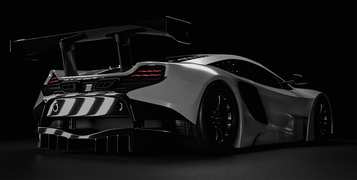
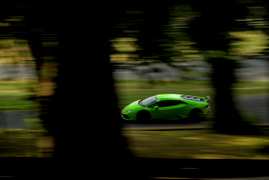
The Evolution of Automotive Extremes: A Deep Dive into the World’s Fastest Cars of 2026
For over a century, the quest to conquer the boundary between man and machine has driven the automotive world into a state of perpetual evolution. The story of the fastest cars is not just about raw horsepower or the blur of a speedometer needle; it’s a narrative of human ingenuity, relentless engineering, and the insatiable desire to push beyond perceived limits. In 2026, the landscape of automotive performance has shifted dramatically, with manufacturers breaking new ground in aerodynamics, electrification, and materials science. This isn’t just about the quarter-mile anymore; it’s about a holistic approach to speed, efficiency, and the very definition of a hypercar.
The driving force behind this relentless pursuit is a complex cocktail of technological innovation, brand prestige, and a burgeoning market that demands more than just transportation. Today’s top-tier automakers are not just selling cars; they’re selling experiences, engineering marvels, and a piece of automotive history. From the carbon-fiber monoliths of Sweden to the electrified precision of Germany, the competition has never been fiercer, nor the results more breathtaking. This article delves into the upper echelon of automotive performance, exploring the ten fastest cars that are redefining the benchmarks of speed, acceleration, and technological prowess in 2026.
The Metrics of Madness: Defining the Fastest of the Fast
Before we embark on this high-octane journey, it’s crucial to understand the yardsticks by which these automotive titans are measured. In the hypercar realm, a simple top speed figure doesn’t tell the whole story. The true measure of a car’s capability lies in a comprehensive suite of metrics that evaluate its performance from every angle.
Verified Highest Speed: This remains the gold standard, but in 2026, the definition of “verified” has become even more stringent. Manufacturers are no longer satisfied with one-way runs; two-way average speeds, GPS telemetry, and independent third-party validation are now the prerequisites for any serious claim.
Speed Metrics (0-60 mph and 0-100 km/h): The initial burst of acceleration is often the most visceral experience for the driver. The ability to catapult from a standstill to highway speeds in a blink is a testament to a car’s powertrain responsiveness and traction management systems.
Comprehensive Performance: This encompasses the car’s handling prowess, braking performance, and high-speed stability. A car that can only go fast in a straight line is merely a drag racer; a true hypercar needs to perform flawlessly on a demanding circuit.
Practical Driving Performance: In an era of electrification and increasing environmental awareness, the practicality of a hypercar is being redefined. Reliability, ease of use, and even the ability to coexist with daily traffic are increasingly important factors for today’s discerning buyers.
The 2026 Pantheon: The Ten Fastest Cars in the World
Koenigsegg Jesko Absolut – 330 MPH (Projected)
Christian von Koenigsegg has long been the enfant terrible of the hypercar world, and with the Jesko Absolut, he has crafted what he calls the “fastest road-legal car ever made.” Powered by a twin-turbocharged V8 that runs on E85 race fuel, the Absolut churns out a staggering 1,600 horsepower and 1,106 lb-ft of torque. But the true genius lies in its aerodynamics. With a drag coefficient of just 0.278 Cd, the Jesko Absolut is a missile designed to slice through the air with minimal resistance. While a verified top speed run is still pending, the simulations and engineering calculations point to a theoretical maximum exceeding 330 mph. The 5-speed gearbox, which skips gears for faster transitions, is a marvel of engineering in itself. In 2026, the Jesko Absolut remains the benchmark against which all other speed machines are measured, a testament to Swedish ingenuity and a refusal to bow to conventional limitations.
Bugatti Chiron Supersport 300+ – 304 MPH
Even years after its initial production, the Bugatti Chiron Supersport 300+ remains an icon of speed. This limited-edition hypercar, a successor to the legendary Veyron, shattered the 300 mph barrier in 2019, albeit in a one-way run on Volkswagen’s Ehra-Lessien test track. Powered by an 8.0-liter quad-turbocharged W16 engine producing 1,600 horsepower, the Supersport 300+ is a symphony of brute force and refined engineering. Its elongated tail and optimized aerodynamics reduce drag by 40% compared to the standard Chiron, allowing it to maintain stability at speeds that would make other cars disintegrate. While Bugatti has shifted its focus to the hybrid era with models like the Mistral, the Supersport 300+ stands as a monumental achievement in internal combustion engine performance.
SSC Tuatara – 295 MPH
The SSC Tuatara’s journey to the top has been anything but smooth. After a controversial and ultimately retracted claim of a 331 mph record, SSC North America, under the leadership of Jerod Shelby, has painstakingly refined its performance data. The Tuatara’s 5.9-liter twin-turbo V8 engine, capable of producing 1,750 horsepower on E85 fuel, is a formidable piece of engineering. Recent verified runs have confirmed a top speed of 295 mph, a figure that, while perhaps not the absolute fastest, is achieved with stunning precision. The car’s aerodynamic efficiency, with a drag coefficient of 0.279 Cd, is on par with the Jesko Absolut, making it a true contender in the hypercar arena. The Tuatara’s story is a lesson in perseverance, proving that with enough dedication, even the most ambitious goals can be realized.
Hennessey Venom F5 – 272 MPH (Current), 311 MPH (Target)
American tuning legend John Hennessey has always believed in the power of American muscle, and the Venom F5 is his magnum opus. Packing a 6.6-liter twin-turbocharged V8 that pumps out an astonishing 1,817 horsepower, the F5 is a lightweight carbon-fiber monocoque masterpiece. It rockets from 0 to 60 mph in a blistering 2.6 seconds and has a verified top speed of 272 mph. However, Hennessey’s sights are set much higher. The company is confident that the F5 can achieve a top speed of over 311 mph, a feat that would place it among the absolute elite. The car’s aggressive aerodynamics, with active aero elements that adjust at high speeds, are designed to keep it glued to the pavement. In 2026, the Venom F5 represents the pinnacle of American hypercar engineering, a brutal and beautiful machine that pushes the boundaries of what’s possible.
Rimac Nevera – 256 MPH
The Rimac Nevera has redefined the hypercar landscape by proving that electric vehicles can be faster than their gasoline-powered counterparts. This Croatian-built masterpiece utilizes four independent electric motors, one for each wheel, producing a combined output of 1,914 horsepower and 1,741 lb-ft of torque. The result is a 0-60 mph time of just 1.81 seconds and a verified top speed of 256 mph. But the Nevera is more than just a straight-line speed demon. Its advanced torque vectoring system allows for incredible agility and cornering prowess, making it a formidable track weapon. The car’s carbon-fiber monocoque and advanced battery technology represent the forefront of EV engineering. In 2026, the Nevera is not just a car; it’s a statement about the future of automotive performance, proving that electric power can be exhilarating, sustainable, and breathtakingly fast.
McLaren Speedtail – 250 MPH
The McLaren Speedtail is a homage to the legendary McLaren F1, the original “hyper-GT” that captured the world’s imagination in the 1990s. With a top speed of 250 mph, the Speedtail is the spiritual successor to the F1, offering a blend of blistering performance and luxurious comfort. Its hybrid powertrain, which combines a twin-turbo V8 with electric motors, produces a combined 1,036 horsepower. The car’s most striking feature is its teardrop-shaped body, which is a masterclass in aerodynamic efficiency. With a drag coefficient of just 0.279 Cd, the Speedtail slices through the air with minimal resistance, allowing it to achieve its impressive top speed without the need for a massive rear wing. In 2026, the Speedtail remains a benchmark for high-speed grand tourers, offering a unique blend of performance, luxury, and design elegance.
Koenigsegg Regera – 250 MPH
The Koenigsegg Regera is a testament to Christian von Koenigsegg’s innovative spirit. This Swedish hypercar eschews a traditional multi-gear transmission in favor of a revolutionary direct-drive system, which uses a hydraulic coupling to transfer power from the engine to the wheels. This unique setup allows for seamless acceleration and a top speed of 250 mph. The Regera’s hybrid powertrain, which combines a twin-turbo V8 with electric motors, produces a combined 1,500 horsepower. The car’s active aerodynamics, with a rear wing that


 The Evolution of Automotive Extremes: A Deep Dive into the World’s Fastest Cars of 2026
For over a century, the quest to conquer the boundary between man and machine has driven the automotive world into a state of perpetual evolution. The story of the fastest cars is not just about raw horsepower or the blur of a speedometer needle; it’s a narrative of human ingenuity, relentless engineering, and the insatiable desire to push beyond perceived limits. In 2026, the landscape of automotive performance has shifted dramatically, with manufacturers breaking new ground in aerodynamics, electrification, and materials science. This isn’t just about the quarter-mile anymore; it’s about a holistic approach to speed, efficiency, and the very definition of a hypercar.
The driving force behind this relentless pursuit is a complex cocktail of technological innovation, brand prestige, and a burgeoning market that demands more than just transportation. Today’s top-tier automakers are not just selling cars; they’re selling experiences, engineering marvels, and a piece of automotive history. From the carbon-fiber monoliths of Sweden to the electrified precision of Germany, the competition has never been fiercer, nor the results more breathtaking. This article delves into the upper echelon of automotive performance, exploring the ten fastest cars that are redefining the benchmarks of speed, acceleration, and technological prowess in 2026.
The Metrics of Madness: Defining the Fastest of the Fast
Before we embark on this high-octane journey, it’s crucial to understand the yardsticks by which these automotive titans are measured. In the hypercar realm, a simple top speed figure doesn’t tell the whole story. The true measure of a car’s capability lies in a comprehensive suite of metrics that evaluate its performance from every angle.
Verified Highest Speed: This remains the gold standard, but in 2026, the definition of “verified” has become even more stringent. Manufacturers are no longer satisfied with one-way runs; two-way average speeds, GPS telemetry, and independent third-party validation are now the prerequisites for any serious claim.
Speed Metrics (0-60 mph and 0-100 km/h): The initial burst of acceleration is often the most visceral experience for the driver. The ability to catapult from a standstill to highway speeds in a blink is a testament to a car’s powertrain responsiveness and traction management systems.
The Evolution of Automotive Extremes: A Deep Dive into the World’s Fastest Cars of 2026
For over a century, the quest to conquer the boundary between man and machine has driven the automotive world into a state of perpetual evolution. The story of the fastest cars is not just about raw horsepower or the blur of a speedometer needle; it’s a narrative of human ingenuity, relentless engineering, and the insatiable desire to push beyond perceived limits. In 2026, the landscape of automotive performance has shifted dramatically, with manufacturers breaking new ground in aerodynamics, electrification, and materials science. This isn’t just about the quarter-mile anymore; it’s about a holistic approach to speed, efficiency, and the very definition of a hypercar.
The driving force behind this relentless pursuit is a complex cocktail of technological innovation, brand prestige, and a burgeoning market that demands more than just transportation. Today’s top-tier automakers are not just selling cars; they’re selling experiences, engineering marvels, and a piece of automotive history. From the carbon-fiber monoliths of Sweden to the electrified precision of Germany, the competition has never been fiercer, nor the results more breathtaking. This article delves into the upper echelon of automotive performance, exploring the ten fastest cars that are redefining the benchmarks of speed, acceleration, and technological prowess in 2026.
The Metrics of Madness: Defining the Fastest of the Fast
Before we embark on this high-octane journey, it’s crucial to understand the yardsticks by which these automotive titans are measured. In the hypercar realm, a simple top speed figure doesn’t tell the whole story. The true measure of a car’s capability lies in a comprehensive suite of metrics that evaluate its performance from every angle.
Verified Highest Speed: This remains the gold standard, but in 2026, the definition of “verified” has become even more stringent. Manufacturers are no longer satisfied with one-way runs; two-way average speeds, GPS telemetry, and independent third-party validation are now the prerequisites for any serious claim.
Speed Metrics (0-60 mph and 0-100 km/h): The initial burst of acceleration is often the most visceral experience for the driver. The ability to catapult from a standstill to highway speeds in a blink is a testament to a car’s powertrain responsiveness and traction management systems.