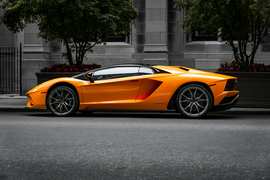
While there are some technicalities when it comes to production cars vs. modified cars, here’s a look at the 10 fastest production cars in the world as of 2026.
It’s a truly mind-blowing era for automotive engineering, where the pursuit of ultimate speed has pushed the boundaries of what we thought was physically possible. These machines aren’t just transportation; they’re rolling sculptures of aerodynamic perfection and raw power, each representing the pinnacle of a manufacturer’s dedication to breaking the 300 mph barrier and beyond.
Whether you’re a petrolhead, a tech enthusiast, or simply someone who appreciates engineering excellence, the level of innovation in these vehicles is sure to leave you speechless. Let’s dive into the hypercars that have etched their names in history.
SSC Tuatara — 316 mph (509 km/h)
The SSC Tuatara holds the coveted title of the fastest production car in the world, a distinction it fought hard to secure. After a controversial initial record run that was later retracted due to data anomalies, SSC North America put those doubts to rest with a verified two-way average speed of 282.9 mph (455.3 km/h) and a one-way peak of 316.11 mph (508.73 km/h).
What makes the Tuatara capable of such blistering speeds? It starts with a feather-light carbon fiber monocoque chassis and body, weighing in at just 2,750 pounds (1,247 kg). This incredible power-to-weight ratio is achieved through a custom-built 5.9-liter twin-turbocharged V8 engine, co-developed with Nelson Racing Engines. In its top-spec configuration running on E85 biofuel, this powerplant churns out a staggering 1,750 horsepower, while even on premium pump gas, it delivers a still-monstrous 1,350 horsepower.
Aerodynamics are equally crucial. The Tuatara features an active rear wing that adjusts its angle based on speed, optimizing downforce for stability in corners and minimizing drag on the straights. The car’s drag coefficient is an astonishingly low 0.279, allowing it to slice through the air with minimal resistance. The cockpit is a blend of luxury and performance, with premium leather upholstery and a digital instrument cluster that displays everything from G-force measurements to tire pressure in real time.
The production run is strictly limited to just 100 units worldwide, making the Tuatara not only one of the fastest but also one of the most exclusive hypercars ever built. Its ability to reach these speeds is a testament to American engineering prowess, combining raw power with sophisticated aerodynamic design.
Bugatti Chiron Super Sport 300+ — 304 mph (490 km/h)
While the title of “production car” can be debated since Bugatti sold the specific car that achieved this feat to a private collector, the Chiron Super Sport 300+ remains one of the most iconic speed machines ever created. In 2019, the heavily modified prototype, often referred to as the “Chiron Longtail,” became the first production-based car to break the 300 mph barrier, hitting a verified one-way top speed of 304.773 mph (490.484 km/h) at the Ehra-Lessien test track in Germany.
The engineering behind this achievement is simply extraordinary. To push beyond 300 mph, Bugatti’s engineers had to address several critical factors. They extended the Chiron’s iconic longtail silhouette by nearly 10 inches (25 cm) to reduce drag and improve stability at extreme velocities. The car is powered by the same legendary 8.0-liter quad-turbocharged W16 engine as the standard Chiron, but in the Super Sport 300+, it’s been tuned to produce a mind-boggling 1,600 horsepower and 1,180 lb-ft of torque.
To handle the immense forces at play, the transmission was strengthened, and the gear ratios were adjusted for higher top speeds. The car rides on Michelin Pilot Sport Cup 2 tires specifically developed for this project, capable of withstanding temperatures exceeding 500 degrees Fahrenheit (260 degrees Celsius). The suspension was also re-tuned to keep the car planted at speeds where most tires would simply disintegrate.
Visually, the Super Sport 300+ is unmistakable with its exposed carbon fiber body coated in a striking Jet Orange lacquer, a nod to the Bugatti EB 110 Super Sport that achieved a similar feat decades earlier. Inside, the cabin is driver-focused, featuring black carbon fiber and Alcantara upholstery, with safety harnesses instead of traditional seatbelts to keep occupants secure during the intense acceleration.
While Bugatti ultimately decided not to produce a customer version that could officially match the 300 mph run (due to safety concerns and tire limitations), the 30 units of the Super Sport 300+ that were built are legendary collector’s items, representing the pinnacle of hypercar engineering and the moment humanity first broke the 300 mph barrier with a production-based car.
Koenigsegg Agera RS — 278 mph (447 km/h)
Before the Bugatti and SSC took their shot at the 300 mph mark, the Koenigsegg Agera RS held the official Guinness World Record for the fastest production car from 2017 to 2019. This Swedish marvel demonstrated that raw power and sophisticated aerodynamics could combine to create something truly extraordinary.
The Agera RS achieved its record-breaking average speed of 277.87 mph (447.19 km/h) on a closed public highway in Pahrump, Nevada. The run was conducted under strict two-way verification rules, ensuring that wind conditions didn’t artificially inflate the result. During the run, the car hit a staggering one-way top speed of 284.55 mph (457.94 km/h), showcasing its incredible acceleration.
Powering this engineering masterpiece is Koenigsegg’s proprietary 5.0-liter twin-turbocharged V8 engine. In its most potent configuration, the Agera RS produces a breathtaking 1,360 horsepower and 1,011 lb-ft of torque when running on E85 biofuel. Even on premium pump gas, it still delivers a formidable 1,160 horsepower. This power is sent to the rear wheels through a lightning-fast 7-speed dual-clutch transmission, which Koenigsegg developed in-house to handle the massive torque output.
Aerodynamics play a critical role in the Agera RS’s performance. It features a massive, electronically controlled active rear wing that generates up to 992 pounds (450 kg) of downforce at 155 mph (250 km/h), keeping the car planted during high-speed runs and through corners. The car’s drag coefficient is an impressive 0.33, a remarkable figure for a car that generates this much downforce.
Koenigsegg’s philosophy of “one-megawatt power” is evident in the Agera RS, as the car produces well over 1,000 horsepower. The lightweight construction, with extensive use of carbon fiber and aluminum honeycomb, contributes to an astonishing power-to-weight ratio. The interior is a blend of racing-inspired minimalism and luxury, with carbon fiber accents, leather upholstery, and a digital instrument cluster that provides real-time performance data.
The Agera RS represents the culmination of Koenigsegg’s engineering expertise, a testament to the company’s commitment to pushing the boundaries of automotive performance. It remains a benchmark in the world of hypercars, proving that with the right combination of power, aerodynamics, and engineering ingenuity, even the most ambitious speed targets can be achieved.
Koenigsegg Agera R — 273 mph (439 km/h)
Before the Agera RS took the crown, the Koenigsegg Agera R was a dominant force in the world of top speed records. Unveiled at the 2011 Geneva Motor Show, the Agera R quickly established itself as one of the fastest and most capable hypercars on the planet. While it never achieved a verified two-way average top speed record like its successor, it demonstrated incredible performance potential during various tests.
The Agera R is powered by a formidable 5.0-liter twin-turbocharged V8 engine that produces a stunning 1,114 horsepower and 887 lb-ft of torque when running on E85 biofuel. On premium pump gas, it still delivers a formidable 940 horsepower. This raw power is sent to the rear wheels through a 7-speed dual-clutch transmission, which allows for incredibly rapid gear changes to keep the engine in its optimal power band.
What sets the Agera R apart is its focus on both straight-line speed and track performance. It features an advanced aerodynamics package with a massive active rear wing that generates significant downforce, helping to keep the car planted at high speeds. The car’s lightweight construction, with extensive use of carbon fiber and aluminum honeycomb, results in an impressive power-to-weight ratio that contributes to its blistering acceleration.
In various tests, the Agera R demonstrated its incredible capabilities. It achieved a 0-249