



The Era of the Hypercar: A Deep Dive into the World’s Fastest Production Vehicles of 2026
The quest for ultimate velocity has always been the ultimate playground for automotive engineers and petrolheads alike. While the daily commute rarely demands more than a modest 60 miles per hour, the psychological barrier of the three-hundred-mile-per-hour mark continues to captivate the public imagination. In 2026, the landscape of hypercar performance has evolved dramatically, blending raw horsepower with cutting-edge aerodynamics and sustainable technology. This article delves into the elite echelon of speed demons, analyzing the technical prowess and market positioning of the world’s fastest production cars.
 The Apex Predators: Redefining the Limits of Velocity
At the zenith of this exclusive club sits the SSC Tuatara, a vehicle that has redefined what many thought possible in the realm of gasoline-powered land speed records. While its initial record-setting runs faced scrutiny, the manufacturer, SSC North America, has solidified its place through repeatable, verified performances. The Tuatara’s headline figure of 316 mph (509 km/h) is not merely a number on a spec sheet; it represents a symphony of engineering precision. Its 5.9-liter twin-turbocharged V8 engine, developed in partnership with Nelson Racing Engines, produces a staggering 1,750 horsepower on E85 fuel. However, the true magic lies in its aerodynamics. The car’s drag coefficient of 0.279 is a testament to years of computational fluid dynamics (CFD) analysis and wind tunnel testing, ensuring that every curve and contour is optimized to slice through the air with minimal resistance.
Following closely is the automotive titan, Bugatti. The Chiron Super Sport 300+ serves as a monument to French engineering excellence and a symbol of breaking the seemingly insurmountable 300 mph barrier. Although Bugatti officially retired from chasing top speed records after this model, its achievement remains etched in automotive history. The elongated tail section, a feature distinguishing it from the standard Chiron, reduces drag by 40% and increases stability at extreme velocities. Under the hood, the iconic quad-turbocharged 8.0-liter W16 engine pushes out 1,600 horsepower. The ‘300+’ in its name references the legendary run where the car clocked 304 mph (490 km/h) on the Ehra-Lessien test track. It is important to note that this was a one-way run, and customer cars are electronically limited, yet the engineering DNA of this machine ensures its place among the fastest ever created.
The Swedish Sensation: Innovation and Speed
When discussing hypercars, the name Koenigsegg inevitably arises. Christian von Koenigsegg’s vision has consistently challenged the established order, proving that a smaller, more nimble manufacturer can out-engineer automotive giants. The Koenigsegg Agera RS holds the official Guinness World Record for the fastest production car, set in 2017 on a closed public highway in Nevada. With an average top speed of 278 mph (447 km/h), achieved over two runs in opposite directions to negate wind effects, the Agera RS demonstrated a perfect marriage of power and handling. Its 5.0-liter twin-turbo V8 produces 1,360 horsepower, but like many Swedish hypercars, it utilizes advanced technologies like Razer Gearbox to minimize weight and maximize efficiency.
Koenigsegg’s relentless pursuit of improvement is further exemplified by the Koenigsegg Jesko Absolut. While the Agera RS holds the current official record, the Jesko Absolut is engineered to obliterate it. With a theoretical top speed estimated to exceed 330 mph, it is the spiritual successor to the legendary Koenigsegg Agera RS. The ‘Absolut’ designation signifies its status as the ultimate, non-negotiable expression of speed from the Swedish marque. Power comes from a 5.0-liter twin-turbocharged V8 that can produce up to 1,600 horsepower on E85 fuel. However, the key to its astronomical top speed lies in its revolutionary transmission and aerodynamics. The ‘Light Speed Transmission’ (LST) allows for near-instantaneous gear changes, minimizing power loss. Furthermore, the car’s design eliminates rear wings and other drag-inducing elements, resulting in an astonishingly low drag coefficient of 0.278.
The American Challenger: Raw Power Redefined
America’s contribution to the world of hypercars is epitomized by Hennessey Performance Engineering. The Hennessey Venom GT, though now a predecessor to more modern offerings, remains a significant benchmark in automotive speed history. Based on a heavily modified Lotus Exige chassis, the Venom GT’s performance stems from its monstrous 7.0-liter twin-turbocharged V8 engine, producing 1,244 horsepower. In 2014, the Venom GT achieved a top speed of 270 mph (435 km/h) at the Kennedy Space Center, setting a Guinness World Record for the fastest production car to reach 200 mph. While its construction method—a low-volume, hand-built process—meant it was technically a ‘specialty vehicle’ rather than a mass-production car, its impact on the industry was undeniable, proving that American ingenuity could rival European hypercar dynasties.
The Apex Predators: Redefining the Limits of Velocity
At the zenith of this exclusive club sits the SSC Tuatara, a vehicle that has redefined what many thought possible in the realm of gasoline-powered land speed records. While its initial record-setting runs faced scrutiny, the manufacturer, SSC North America, has solidified its place through repeatable, verified performances. The Tuatara’s headline figure of 316 mph (509 km/h) is not merely a number on a spec sheet; it represents a symphony of engineering precision. Its 5.9-liter twin-turbocharged V8 engine, developed in partnership with Nelson Racing Engines, produces a staggering 1,750 horsepower on E85 fuel. However, the true magic lies in its aerodynamics. The car’s drag coefficient of 0.279 is a testament to years of computational fluid dynamics (CFD) analysis and wind tunnel testing, ensuring that every curve and contour is optimized to slice through the air with minimal resistance.
Following closely is the automotive titan, Bugatti. The Chiron Super Sport 300+ serves as a monument to French engineering excellence and a symbol of breaking the seemingly insurmountable 300 mph barrier. Although Bugatti officially retired from chasing top speed records after this model, its achievement remains etched in automotive history. The elongated tail section, a feature distinguishing it from the standard Chiron, reduces drag by 40% and increases stability at extreme velocities. Under the hood, the iconic quad-turbocharged 8.0-liter W16 engine pushes out 1,600 horsepower. The ‘300+’ in its name references the legendary run where the car clocked 304 mph (490 km/h) on the Ehra-Lessien test track. It is important to note that this was a one-way run, and customer cars are electronically limited, yet the engineering DNA of this machine ensures its place among the fastest ever created.
The Swedish Sensation: Innovation and Speed
When discussing hypercars, the name Koenigsegg inevitably arises. Christian von Koenigsegg’s vision has consistently challenged the established order, proving that a smaller, more nimble manufacturer can out-engineer automotive giants. The Koenigsegg Agera RS holds the official Guinness World Record for the fastest production car, set in 2017 on a closed public highway in Nevada. With an average top speed of 278 mph (447 km/h), achieved over two runs in opposite directions to negate wind effects, the Agera RS demonstrated a perfect marriage of power and handling. Its 5.0-liter twin-turbo V8 produces 1,360 horsepower, but like many Swedish hypercars, it utilizes advanced technologies like Razer Gearbox to minimize weight and maximize efficiency.
Koenigsegg’s relentless pursuit of improvement is further exemplified by the Koenigsegg Jesko Absolut. While the Agera RS holds the current official record, the Jesko Absolut is engineered to obliterate it. With a theoretical top speed estimated to exceed 330 mph, it is the spiritual successor to the legendary Koenigsegg Agera RS. The ‘Absolut’ designation signifies its status as the ultimate, non-negotiable expression of speed from the Swedish marque. Power comes from a 5.0-liter twin-turbocharged V8 that can produce up to 1,600 horsepower on E85 fuel. However, the key to its astronomical top speed lies in its revolutionary transmission and aerodynamics. The ‘Light Speed Transmission’ (LST) allows for near-instantaneous gear changes, minimizing power loss. Furthermore, the car’s design eliminates rear wings and other drag-inducing elements, resulting in an astonishingly low drag coefficient of 0.278.
The American Challenger: Raw Power Redefined
America’s contribution to the world of hypercars is epitomized by Hennessey Performance Engineering. The Hennessey Venom GT, though now a predecessor to more modern offerings, remains a significant benchmark in automotive speed history. Based on a heavily modified Lotus Exige chassis, the Venom GT’s performance stems from its monstrous 7.0-liter twin-turbocharged V8 engine, producing 1,244 horsepower. In 2014, the Venom GT achieved a top speed of 270 mph (435 km/h) at the Kennedy Space Center, setting a Guinness World Record for the fastest production car to reach 200 mph. While its construction method—a low-volume, hand-built process—meant it was technically a ‘specialty vehicle’ rather than a mass-production car, its impact on the industry was undeniable, proving that American ingenuity could rival European hypercar dynasties.
 The Evolution of an Icon: The Hennessey Venom F5
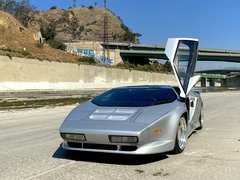
Building upon the Venom GT’s legacy, Hennessey has unleashed the Venom F5. This is not merely an evolution; it is a complete reinvention, designed from the ground up to be a world-class hypercar. The ‘F5’ designation refers to the Fujita scale rating for the most powerful tornadoes, symbolizing the car’s destructive potential on the asphalt. Hennessey has boldly claimed a top speed exceeding 311 mph, and initial tests suggest this is well within reach. The F5 is powered by a 6.6-liter twin-turbocharged V8 known as ‘Fury,’ which generates an earth-shattering 1,817 horsepower. This immense power is delivered through a seven-speed single-clutch automated manual transmission, capable of shifting gears in just 130 milliseconds. Unlike its predecessor, the F5 is a bespoke creation, with a carbon fiber monocoque chassis that ensures a dry weight of just 1,305 kg (2,877 lbs). This featherlight construction, combined with its aerodynamic efficiency, allows the F5 to accelerate from 0 to 60 mph in a mere 2.6 seconds. The car’s design is a masterclass in form following function, with active aerodynamics and a sleek, low-slung profile that minimizes drag while maintaining stability at speeds that would humble lesser vehicles. The F5 represents Hennessey’s ambition to compete directly with the established European hypercar royalty, offering a blend of American muscle and European refinement that is truly intoxicating.
The Resurgence of Rimac: Electrifying Speed
In the 2026 landscape, the definition of ‘hypercar’ has expanded to include electric marvels that challenge the very notion of internal combustion’s dominance. The Rimac Nevera, a Croatian electric hypercar, has redefined the parameters of acceleration and performance. With four independent electric motors, one for each wheel, the Nevera produces a combined output of 1,914 horsepower. This electric powertrain delivers instant torque, propelling the Nevera from 0 to 60 mph in a mind-bending 1.85 seconds. Its top speed of 258 mph (415 km/h), while lower than some gasoline rivals, is achieved with a level of refinement and technological sophistication that is truly groundbreaking. The Nevera’s advanced torque vectoring system allows for unprecedented handling capabilities, making it as adept on a racetrack as it is on a drag strip.
The Legacy of Bugatti: Refined Power and Luxury
While the Chiron Super Sport 300+ represents Bugatti’s peak in top speed chasing, the Bugatti Chiron Super Sport continues to be a benchmark for high-speed luxury touring. This model retains the quad-turbocharged 8.0-liter W16 engine, albeit with slightly detuned but still immense power figures, making it the perfect companion for high-speed Autobahn cruising. Its design emphasizes long-distance comfort without sacrificing the breathtaking performance that defines the Bugatti brand. The Super Sport combines the raw power of a hypercar with the luxurious appointments of a grand tourer, creating a vehicle that is truly unique in the automotive world. The attention to detail in the cabin, with its exquisite leather and carbon fiber finishes, ensures that every journey is an experience in opulence.
The McLaren Speedtail: The Ultimate Grand Tourer
The Evolution of an Icon: The Hennessey Venom F5
Building upon the Venom GT’s legacy, Hennessey has unleashed the Venom F5. This is not merely an evolution; it is a complete reinvention, designed from the ground up to be a world-class hypercar. The ‘F5’ designation refers to the Fujita scale rating for the most powerful tornadoes, symbolizing the car’s destructive potential on the asphalt. Hennessey has boldly claimed a top speed exceeding 311 mph, and initial tests suggest this is well within reach. The F5 is powered by a 6.6-liter twin-turbocharged V8 known as ‘Fury,’ which generates an earth-shattering 1,817 horsepower. This immense power is delivered through a seven-speed single-clutch automated manual transmission, capable of shifting gears in just 130 milliseconds. Unlike its predecessor, the F5 is a bespoke creation, with a carbon fiber monocoque chassis that ensures a dry weight of just 1,305 kg (2,877 lbs). This featherlight construction, combined with its aerodynamic efficiency, allows the F5 to accelerate from 0 to 60 mph in a mere 2.6 seconds. The car’s design is a masterclass in form following function, with active aerodynamics and a sleek, low-slung profile that minimizes drag while maintaining stability at speeds that would humble lesser vehicles. The F5 represents Hennessey’s ambition to compete directly with the established European hypercar royalty, offering a blend of American muscle and European refinement that is truly intoxicating.
The Resurgence of Rimac: Electrifying Speed
In the 2026 landscape, the definition of ‘hypercar’ has expanded to include electric marvels that challenge the very notion of internal combustion’s dominance. The Rimac Nevera, a Croatian electric hypercar, has redefined the parameters of acceleration and performance. With four independent electric motors, one for each wheel, the Nevera produces a combined output of 1,914 horsepower. This electric powertrain delivers instant torque, propelling the Nevera from 0 to 60 mph in a mind-bending 1.85 seconds. Its top speed of 258 mph (415 km/h), while lower than some gasoline rivals, is achieved with a level of refinement and technological sophistication that is truly groundbreaking. The Nevera’s advanced torque vectoring system allows for unprecedented handling capabilities, making it as adept on a racetrack as it is on a drag strip.
The Legacy of Bugatti: Refined Power and Luxury
While the Chiron Super Sport 300+ represents Bugatti’s peak in top speed chasing, the Bugatti Chiron Super Sport continues to be a benchmark for high-speed luxury touring. This model retains the quad-turbocharged 8.0-liter W16 engine, albeit with slightly detuned but still immense power figures, making it the perfect companion for high-speed Autobahn cruising. Its design emphasizes long-distance comfort without sacrificing the breathtaking performance that defines the Bugatti brand. The Super Sport combines the raw power of a hypercar with the luxurious appointments of a grand tourer, creating a vehicle that is truly unique in the automotive world. The attention to detail in the cabin, with its exquisite leather and carbon fiber finishes, ensures that every journey is an experience in opulence.
The McLaren Speedtail: The Ultimate Grand Tourer
 In the realm of speed, the McLaren Speedtail represents a different philosophy. Dubbed the ‘Hyper-GT’ by the Woking-based manufacturer, the Speedtail prioritizes long-distance speed and comfort over outright track performance. Its most striking feature is its unique three-seat configuration, with the driver positioned in the center, harking back to the iconic McLaren F1. The Speedtail’s powertrain is a testament to McLaren’s hybrid expertise, combining a 4.0-liter twin-turbocharged V8 engine with an electric motor to produce a combined output of 1,036 horsepower. This hybrid system allows for an electronically limited top speed of 250 mph (402 km/h), but it is the car’s aerodynamic efficiency that truly sets it apart