



The 2026 Automotive Speed Hierarchy: A Deep Dive into the World’s Fastest Hypercars
The pursuit of velocity has always been the ultimate benchmark of automotive engineering prowess. Since the dawn of the internal combustion engine, manufacturers have relentlessly chased higher top speeds, pushing the boundaries of physics, aerodynamics, and powertrain technology. In the hypercar segment, this quest transcends mere transportation; it is a battle for technological supremacy and bragging rights on the global stage. As we navigate through 2026, the landscape of automotive speed has evolved yet again, marked by the emergence of hybrid and electric behemoths capable of shattering previously unimaginable velocity records.
This comprehensive analysis delves into the crème de la crème of speed machines, exploring the technical marvels that propel these vehicles to stratospheric velocities. We will dissect the engineering philosophies, aerodynamic innovations, and powertrain configurations that differentiate the top contenders in the world’s fastest cars.
Understanding the Dynamics of Speed: Beyond the Numbers
Before plunging into the specifics of the top 10 fastest cars in the world, it is crucial to understand the complex interplay of factors that contribute to a vehicle’s top speed. Unlike acceleration metrics, such as the quarter-mile or 0-60 mph times, top speed is a function of raw power, aerodynamic efficiency, and the ability to sustain performance under extreme duress.
Aerodynamics: The Silent Conqueror
In the realm of hypercars, aerodynamics plays a pivotal role. As speeds increase, air resistance (drag) increases exponentially, becoming the primary limiting factor. Engineers utilize computational fluid dynamics (CFD) and extensive wind tunnel testing to sculpt vehicles that slice through the air with minimal resistance. Active aerodynamic elements, such as deployable rear wings, adaptive spoilers, and variable ride heights, allow these machines to optimize their drag coefficient (Cd) for specific speed regimes.
 Powertrain Innovation: Hybridization Takes Center Stage
While traditional V12 and W16 engines have historically dominated the top speed charts, 2026 has witnessed the ascendancy of hybrid powertrains. The integration of electric motors with internal combustion engines provides an immediate torque boost, enabling faster acceleration to critical speeds. Furthermore, these hybrid systems allow for intelligent energy recovery and deployment, ensuring that the vehicle maintains peak performance throughout its velocity run. The implications of electrification on future top speed records remain a compelling area of speculation.
Tire Technology: The Unsung Hero
Achieving and maintaining speeds exceeding 300 mph (483 km/h) places immense stress on tires. Specialized high-performance tires, often co-developed by tire manufacturers and hypercar OEMs, are engineered to withstand extreme centrifugal forces and temperatures. These tires feature reinforced construction and advanced rubber compounds to ensure grip and structural integrity at velocities where conventional tires would disintegrate.
The 2026 Top 10 Fastest Cars: A Comprehensive Ranking
Based on validated top speed runs and manufacturer claims, here is the definitive ranking of the world’s fastest cars as of 2026.
SSC Tuatara: The Verified Velocity King
The SSC Tuatara, hailing from the United States, holds the coveted title of the world’s fastest production car in 2026. After a controversial initial run that was later retracted due to verification issues, SSC North America conducted a meticulously documented and validated top speed attempt. The Tuatara achieved a staggering two-way average top speed of 282.9 mph (455.3 km/h), with a peak one-way speed of 295 mph (474.8 km/h).
Engineered by American automotive visionary Jerod Shelby, the Tuatara is a testament to boutique hypercar manufacturing. Its power plant is a 5.9-liter twin-turbocharged V8 engine, capable of producing an astonishing 1,750 horsepower on E85 fuel. This immense power is channeled through a Ricardo seven-speed dual-clutch transmission, ensuring seamless gear changes even at triple-digit speeds.
Aerodynamically, the Tuatara is a masterpiece of airflow management. Its sleek, elongated silhouette minimizes drag, while active aerodynamic elements adjust to optimize downforce during high-speed runs. The vehicle’s carbon fiber monocoque chassis ensures exceptional rigidity and a lightweight construction, tipping the scales at a mere 2,750 pounds (1,247 kg).
Beyond its headline-grabbing top speed, the Tuatara represents a triumph of American engineering innovation. Its development involved extensive simulation and real-world testing, pushing the boundaries of what is achievable in a road-legal vehicle. The Tuatara serves as a benchmark for hypercar development, demonstrating that with the right combination of power, aerodynamics, and precision engineering, even smaller manufacturers can challenge established giants.
Bugatti Chiron Super Sport 300+: The 300 MPH Milestone Breaker
The Bugatti Chiron Super Sport 300+, a limited-production variant of the iconic Chiron, holds a special place in automotive history as the first production car to officially break the 300 mph barrier. Although this milestone was achieved during a one-way run and not a certified two-way average, its impact on the hypercar landscape cannot be overstated. In 2019, at the Ehra-Lessien test track in Germany, the Chiron Super Sport 300+ reached a verified top speed of 304.77 mph (490.48 km/h).
Powertrain Innovation: Hybridization Takes Center Stage
While traditional V12 and W16 engines have historically dominated the top speed charts, 2026 has witnessed the ascendancy of hybrid powertrains. The integration of electric motors with internal combustion engines provides an immediate torque boost, enabling faster acceleration to critical speeds. Furthermore, these hybrid systems allow for intelligent energy recovery and deployment, ensuring that the vehicle maintains peak performance throughout its velocity run. The implications of electrification on future top speed records remain a compelling area of speculation.
Tire Technology: The Unsung Hero
Achieving and maintaining speeds exceeding 300 mph (483 km/h) places immense stress on tires. Specialized high-performance tires, often co-developed by tire manufacturers and hypercar OEMs, are engineered to withstand extreme centrifugal forces and temperatures. These tires feature reinforced construction and advanced rubber compounds to ensure grip and structural integrity at velocities where conventional tires would disintegrate.
The 2026 Top 10 Fastest Cars: A Comprehensive Ranking
Based on validated top speed runs and manufacturer claims, here is the definitive ranking of the world’s fastest cars as of 2026.
SSC Tuatara: The Verified Velocity King
The SSC Tuatara, hailing from the United States, holds the coveted title of the world’s fastest production car in 2026. After a controversial initial run that was later retracted due to verification issues, SSC North America conducted a meticulously documented and validated top speed attempt. The Tuatara achieved a staggering two-way average top speed of 282.9 mph (455.3 km/h), with a peak one-way speed of 295 mph (474.8 km/h).
Engineered by American automotive visionary Jerod Shelby, the Tuatara is a testament to boutique hypercar manufacturing. Its power plant is a 5.9-liter twin-turbocharged V8 engine, capable of producing an astonishing 1,750 horsepower on E85 fuel. This immense power is channeled through a Ricardo seven-speed dual-clutch transmission, ensuring seamless gear changes even at triple-digit speeds.
Aerodynamically, the Tuatara is a masterpiece of airflow management. Its sleek, elongated silhouette minimizes drag, while active aerodynamic elements adjust to optimize downforce during high-speed runs. The vehicle’s carbon fiber monocoque chassis ensures exceptional rigidity and a lightweight construction, tipping the scales at a mere 2,750 pounds (1,247 kg).
Beyond its headline-grabbing top speed, the Tuatara represents a triumph of American engineering innovation. Its development involved extensive simulation and real-world testing, pushing the boundaries of what is achievable in a road-legal vehicle. The Tuatara serves as a benchmark for hypercar development, demonstrating that with the right combination of power, aerodynamics, and precision engineering, even smaller manufacturers can challenge established giants.
Bugatti Chiron Super Sport 300+: The 300 MPH Milestone Breaker
The Bugatti Chiron Super Sport 300+, a limited-production variant of the iconic Chiron, holds a special place in automotive history as the first production car to officially break the 300 mph barrier. Although this milestone was achieved during a one-way run and not a certified two-way average, its impact on the hypercar landscape cannot be overstated. In 2019, at the Ehra-Lessien test track in Germany, the Chiron Super Sport 300+ reached a verified top speed of 304.77 mph (490.48 km/h).
 This remarkable achievement was made possible by Bugatti’s relentless pursuit of engineering excellence. The Super Sport 300+ is an aerodynamic optimization of the standard Chiron, featuring a long-tail design that reduces drag and improves high-speed stability. The rear section of the car was extended by approximately 25 cm (9.8 inches) to minimize turbulence and enhance airflow.
Under the hood, the Chiron Super Sport 300+ is powered by Bugatti’s legendary quad-turbocharged 8.0-liter W16 engine. In this specialized variant, the engine produces a colossal 1,600 horsepower, a slight increase over the standard Chiron’s output. This power is delivered through an advanced all-wheel-drive system and a reinforced seven-speed dual-clutch transmission capable of handling the immense torque and rotational speeds.
The development of the Super Sport 300+ involved extensive collaboration between Bugatti’s engineering team and tire manufacturer Michelin. The tires used for the 300 mph run were specially developed to withstand the extreme forces generated at such velocities. This collaboration highlights the critical interdependence between powertrain performance and tire technology in achieving ultimate speed.
While the production run of the Chiron Super Sport 300+ was limited to just 30 units, its legacy endures. It demonstrated that with sufficient engineering resources and a willingness to push the boundaries, even road-legal vehicles can approach speeds previously thought to be the exclusive domain of specialized racing machines. The 300+ remains a symbol of Bugatti’s engineering prowess and its commitment to automotive excellence.
Koenigsegg Agera RS: The Former Record Holder
Before the advent of the Tuatara and the modified Chiron, the Koenigsegg Agera RS reigned supreme as the world’s fastest production car. This Swedish hypercar set a benchmark that stood for several years, showcasing the engineering brilliance of Christian von Koenigsegg and his team. In 2017, on a closed section of Nevada State Route 375, the Agera RS achieved a two-way average top speed of 277.9 mph (447.2 km/h).
The Agera RS is a testament to Koenigsegg’s philosophy of “Regera” – Swedish for “to reign.” It combines extreme performance with a surprising degree of usability, making it a rare breed of hypercar that can be driven on public roads as well as track days.
At the heart of the Agera RS lies a 5.0-liter twin-supercharged V8 engine, producing an astonishing 1,160 horsepower on standard fuel and up to 1,360 horsepower on E85. This power is delivered through Koenigsegg’s innovative seven-speed dual-clutch transmission, which features a unique single-input shaft design that minimizes weight and complexity.
Aerodynamically, the Agera RS is a marvel of efficiency. It features an active rear wing that adjusts its angle of attack based on speed and driving conditions. This active aero system allows the car to balance the need for downforce during cornering with the requirement for minimal drag during high-speed runs.
The Agera RS represents the pinnacle of Koenigsegg’s early hypercar development. It established the brand as a formidable competitor to established manufacturers like Bugatti, demonstrating that innovative engineering and a focus on performance-to-weight ratio could yield exceptional results. While it has since been surpassed in top speed, the Agera RS remains an iconic vehicle that redefined the standards of hypercar performance.
Hennessey Venom GT: American Engineering at its Most Potent
The Hennessey Venom GT, a product of American tuner Hennessey Performance Engineering, represents a different approach to achieving extreme speeds. Instead of starting with a clean-sheet design, Hennessey utilized the lightweight Lotus Exige chassis as the foundation for its performance creation. This marriage of a lightweight chassis with a monstrously powerful engine resulted in a car that delivered breathtaking performance.
This remarkable achievement was made possible by Bugatti’s relentless pursuit of engineering excellence. The Super Sport 300+ is an aerodynamic optimization of the standard Chiron, featuring a long-tail design that reduces drag and improves high-speed stability. The rear section of the car was extended by approximately 25 cm (9.8 inches) to minimize turbulence and enhance airflow.
Under the hood, the Chiron Super Sport 300+ is powered by Bugatti’s legendary quad-turbocharged 8.0-liter W16 engine. In this specialized variant, the engine produces a colossal 1,600 horsepower, a slight increase over the standard Chiron’s output. This power is delivered through an advanced all-wheel-drive system and a reinforced seven-speed dual-clutch transmission capable of handling the immense torque and rotational speeds.
The development of the Super Sport 300+ involved extensive collaboration between Bugatti’s engineering team and tire manufacturer Michelin. The tires used for the 300 mph run were specially developed to withstand the extreme forces generated at such velocities. This collaboration highlights the critical interdependence between powertrain performance and tire technology in achieving ultimate speed.
While the production run of the Chiron Super Sport 300+ was limited to just 30 units, its legacy endures. It demonstrated that with sufficient engineering resources and a willingness to push the boundaries, even road-legal vehicles can approach speeds previously thought to be the exclusive domain of specialized racing machines. The 300+ remains a symbol of Bugatti’s engineering prowess and its commitment to automotive excellence.
Koenigsegg Agera RS: The Former Record Holder
Before the advent of the Tuatara and the modified Chiron, the Koenigsegg Agera RS reigned supreme as the world’s fastest production car. This Swedish hypercar set a benchmark that stood for several years, showcasing the engineering brilliance of Christian von Koenigsegg and his team. In 2017, on a closed section of Nevada State Route 375, the Agera RS achieved a two-way average top speed of 277.9 mph (447.2 km/h).
The Agera RS is a testament to Koenigsegg’s philosophy of “Regera” – Swedish for “to reign.” It combines extreme performance with a surprising degree of usability, making it a rare breed of hypercar that can be driven on public roads as well as track days.
At the heart of the Agera RS lies a 5.0-liter twin-supercharged V8 engine, producing an astonishing 1,160 horsepower on standard fuel and up to 1,360 horsepower on E85. This power is delivered through Koenigsegg’s innovative seven-speed dual-clutch transmission, which features a unique single-input shaft design that minimizes weight and complexity.
Aerodynamically, the Agera RS is a marvel of efficiency. It features an active rear wing that adjusts its angle of attack based on speed and driving conditions. This active aero system allows the car to balance the need for downforce during cornering with the requirement for minimal drag during high-speed runs.
The Agera RS represents the pinnacle of Koenigsegg’s early hypercar development. It established the brand as a formidable competitor to established manufacturers like Bugatti, demonstrating that innovative engineering and a focus on performance-to-weight ratio could yield exceptional results. While it has since been surpassed in top speed, the Agera RS remains an iconic vehicle that redefined the standards of hypercar performance.
Hennessey Venom GT: American Engineering at its Most Potent
The Hennessey Venom GT, a product of American tuner Hennessey Performance Engineering, represents a different approach to achieving extreme speeds. Instead of starting with a clean-sheet design, Hennessey utilized the lightweight Lotus Exige chassis as the foundation for its performance creation. This marriage of a lightweight chassis with a monstrously powerful engine resulted in a car that delivered breathtaking performance.
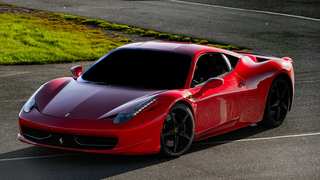 In 2014, the Venom GT achieved a verified top speed of 270.49 mph (435.31 km/h) at the Kennedy Space Center in Florida. While this was a one-way run, it was sufficient to earn the Venom GT the title of