



The Apex Predators: An Expert’s Guide to the World’s 10 Fastest Supercars in 2026
Welcome to the rarefied atmosphere where 200 mph is merely the benchmark for entry. In the hyper-exclusive dominion of the modern supercar, the pursuit of ultimate velocity has transcended engineering—it has become an art form. Forget what you think you know about high-performance vehicles; the machines curated for this list operate on a different plane of existence, where multi-million-dollar price tags are eclipsed only by the audacity of their engineering and the exclusivity of their ownership. This is a world where automotive masterpieces are commissioned rather than purchased, often selling out years before a single unit leaves the factory floor. The burning question isn’t merely “how fast can they go?” but rather, “will their custodians ever dare to unleash their full potential outside the climate-controlled confines of a private collection?” As an industry veteran with a decade spent navigating the volatile currents of the automotive market, I can attest that the 2026 landscape represents a seismic shift, blending the mechanical brutality of hyper-performance with the silent, electrifying thrust of the future. Join me as we dissect the ten titans defining the absolute zenith of speed.
Zenvo TSR-S: The Kinetic Masterpiece from Denmark
Our journey begins in the unassuming climes of Denmark, the unlikely home of Zenvo Automotive. The TSR-S is a testament to the idea that automotive genius often blossoms where least expected. This V8-powered leviathan isn’t just built for straight-line speed; it is a precision instrument designed to dominate the racetrack while remaining street-legal. What sets the TSR-S apart is its revolutionary active aerodynamics. The massive rear wing isn’t merely decorative; it pivots, tilts, and twists in three dimensions, optimizing downforce for cornering and deploying as an aggressive air brake when deceleration is paramount. This isn’t just a car; it’s a kinetic sculpture that actively fights the laws of physics.
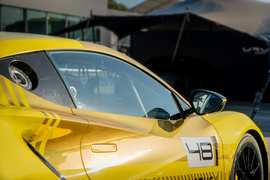 Beneath the carbon fiber skin lies a heart-pounding V8 engine, but this is no ordinary powerplant. To achieve its electrifying performance, Zenvo employs a dual-centrifugal supercharger system. Why one when two deliver twice the sonic euphoria and mechanical fury? This complex induction setup ensures a linear, relentless surge of power that pins occupants to their seats. Officially rated at an electronically limited 202 mph, the company’s whispers suggest that the true mechanical ceiling is significantly higher. For the discerning collector with £1.3 million to spare and a penchant for the avant-garde, the TSR-S offers a raw, unfiltered driving experience that is rapidly becoming a relic in an increasingly automated world.
Ferrari Daytona SP3: Maranello’s Temporal Masterpiece
No survey of the world’s fastest supercars would be complete without an offering from the Prancing Horse, and the Ferrari Daytona SP3 serves as a poignant reminder of Maranello’s enduring legacy. This is not merely a car; it is a rolling work of art, a breathtaking homage to the iconic sports racers that utterly dominated the 24 Hours of Daytona in 1967, sweeping the podium in a feat of engineering and endurance that remains legendary. The styling is a masterclass in retro-futurism, evoking the voluptuous curves of the 1960s prototypes while integrating modern aerodynamic principles that ensure its place in the 21st century.
The soul of the Daytona SP3 resides in a naturally aspirated 6.5-liter V12 engine, a symphonic marvel of Italian engineering. Displacing more cubic centimeters than a small truck, this powerhouse churns out a staggering 829 horsepower, propelling the car to a top speed of 211 mph. However, the true magic of the Daytona SP3 isn’t found in its raw numbers, but in its context. Imagine gliding along the Croisette in Cannes, the setting sun glinting off the paintwork, as you draw up to your mega-yacht. In that moment, the £1.8 million investment feels less like a purchase and more like the acquisition of a floating sculpture. The lack of luggage space is a triviality when the journey itself is the destination.
Ford GT Mk IV: The White Knight’s Resurgence
Ford’s automotive history is punctuated by legendary clashes at Le Mans, and the Mk IV variant of the Ford GT represents the ultimate vindication of that 1960s dominance. This latest incarnation, born from a lineage of audacious engineering and a refusal to yield to European superiority, is strictly a track-only weapon. It strips away the compromises of road legality to deliver a pure, unadulterated racing experience. The design pays respectful homage to its ancestor, yet the performance figures dwarf anything the original could have possibly dreamed of achieving.
Powering this legend is a custom-built EcoBoost engine, specifically designed for the rigors of endurance racing. Ford has projected a top speed that pushes the boundaries of what is considered sane for a road-legal homologation special—a breathtaking 218 mph. Production is set to be strictly limited to just 67 examples, a nod to the year of the original GT40’s iconic victory. Ford is currently fielding \”enquiries\” from potential buyers, a polite euphemism for a vetting process that ensures the car lands in the hands of those who understand its significance. At a projected cost of £1.3 million, one must question whether the ownership experience involves more track time or more investment portfolio management.
Pininfarina Battista: The Silent Storm
In the pantheon of automotive design, few names carry the gravitas of Pininfarina. For over a century, this Italian design house has lent its Midas touch to the world’s most desirable vehicles, often styling the very cars that compete with Ferrari. The Battista marks a historic moment: the first production motor car to officially carry the Pininfarina nameplate. It is a bold declaration of independence, a statement that the company is no longer just the preferred stylist for other manufacturers but a force in its own right.
Beneath the carbon fiber skin lies a heart-pounding V8 engine, but this is no ordinary powerplant. To achieve its electrifying performance, Zenvo employs a dual-centrifugal supercharger system. Why one when two deliver twice the sonic euphoria and mechanical fury? This complex induction setup ensures a linear, relentless surge of power that pins occupants to their seats. Officially rated at an electronically limited 202 mph, the company’s whispers suggest that the true mechanical ceiling is significantly higher. For the discerning collector with £1.3 million to spare and a penchant for the avant-garde, the TSR-S offers a raw, unfiltered driving experience that is rapidly becoming a relic in an increasingly automated world.
Ferrari Daytona SP3: Maranello’s Temporal Masterpiece
No survey of the world’s fastest supercars would be complete without an offering from the Prancing Horse, and the Ferrari Daytona SP3 serves as a poignant reminder of Maranello’s enduring legacy. This is not merely a car; it is a rolling work of art, a breathtaking homage to the iconic sports racers that utterly dominated the 24 Hours of Daytona in 1967, sweeping the podium in a feat of engineering and endurance that remains legendary. The styling is a masterclass in retro-futurism, evoking the voluptuous curves of the 1960s prototypes while integrating modern aerodynamic principles that ensure its place in the 21st century.
The soul of the Daytona SP3 resides in a naturally aspirated 6.5-liter V12 engine, a symphonic marvel of Italian engineering. Displacing more cubic centimeters than a small truck, this powerhouse churns out a staggering 829 horsepower, propelling the car to a top speed of 211 mph. However, the true magic of the Daytona SP3 isn’t found in its raw numbers, but in its context. Imagine gliding along the Croisette in Cannes, the setting sun glinting off the paintwork, as you draw up to your mega-yacht. In that moment, the £1.8 million investment feels less like a purchase and more like the acquisition of a floating sculpture. The lack of luggage space is a triviality when the journey itself is the destination.
Ford GT Mk IV: The White Knight’s Resurgence
Ford’s automotive history is punctuated by legendary clashes at Le Mans, and the Mk IV variant of the Ford GT represents the ultimate vindication of that 1960s dominance. This latest incarnation, born from a lineage of audacious engineering and a refusal to yield to European superiority, is strictly a track-only weapon. It strips away the compromises of road legality to deliver a pure, unadulterated racing experience. The design pays respectful homage to its ancestor, yet the performance figures dwarf anything the original could have possibly dreamed of achieving.
Powering this legend is a custom-built EcoBoost engine, specifically designed for the rigors of endurance racing. Ford has projected a top speed that pushes the boundaries of what is considered sane for a road-legal homologation special—a breathtaking 218 mph. Production is set to be strictly limited to just 67 examples, a nod to the year of the original GT40’s iconic victory. Ford is currently fielding \”enquiries\” from potential buyers, a polite euphemism for a vetting process that ensures the car lands in the hands of those who understand its significance. At a projected cost of £1.3 million, one must question whether the ownership experience involves more track time or more investment portfolio management.
Pininfarina Battista: The Silent Storm
In the pantheon of automotive design, few names carry the gravitas of Pininfarina. For over a century, this Italian design house has lent its Midas touch to the world’s most desirable vehicles, often styling the very cars that compete with Ferrari. The Battista marks a historic moment: the first production motor car to officially carry the Pininfarina nameplate. It is a bold declaration of independence, a statement that the company is no longer just the preferred stylist for other manufacturers but a force in its own right.
 The Battista is a symphony of electrification, a testament to the fact that sustainable power need not sacrifice performance. Its architecture features four independent electric motors, one dedicated to each wheel, allowing for a level of torque vectoring precision that was previously unthinkable. This distributed powertrain channels a staggering amount of energy to the pavement, propelling the Battista to a silent but devastating top speed of 217 mph. The experience is less about the noise and more about the physics, as the car accelerates with an immediacy that defies its luxurious appointments. Prospective buyers are subjected to a rigorous vetting process, ensuring that only 150 examples of this automotive art will ever exist. At £2 million a piece, the Battista is less a car and more a statement of intent about the future of luxury mobility.
Mercedes-AMG One: Formula One for the Road
For years, the Mercedes-AMG One existed only in the realm of vaporware, a tantalizing concept that seemed too audacious to ever become reality. After a development period fraught with engineering challenges—necessitated by the transfer of Formula One technology to a road-legal platform—the One has finally arrived. This is not simply a performance car; it is a piece of Formula One hardware wrapped in a carbon fiber shell, a vehicle that blurs the lines between racing prototype and road-legal transport.
The heart of the AMG One is a mid-mounted 1.6-liter V6 hybrid system, a direct transplant from Lewis Hamilton’s championship-winning race cars. This compact yet ferocious engine is augmented by an array of electric motors, creating a complex hybrid system that delivers an output previously unheard of outside of Grand Prix competition. The result is a claimed top speed of 219 mph, achieved with a level of technological sophistication that renders the driving experience almost surreal. Lewis Hamilton himself was instrumental in the development process, offering insights from the cockpit of his race car to refine the production model. With only 275 examples slated for production, securing one requires not just wealth but patience—and likely a considerable sum to ensure one’s place on the waiting list.
Aston Martin Valkyrie: British Brutality Personified
Aston Martin has long been synonymous with effortless grand touring—powerful yet refined, luxurious yet composed. The Valkyrie, however, shatters that perception entirely. It represents a radical departure from tradition, a brutalist interpretation of performance born from an unprecedented collaboration between Aston Martin and the super-successful Red Bull Racing Formula One team. The guiding hand behind this mechanical marvel is Adrian Newey, the visionary chief technical officer of Red Bull Racing, whose race cars have dominated the F1 circuit for years.
The Valkyrie dispenses with conventional notions of comfort, prioritizing aerodynamic efficiency and raw speed above all else. Power is delivered by a naturally aspirated 6.5-liter V12 engine, a high-revving screamer developed in partnership with Cosworth. This ICE unit is augmented by an electric motor, boosting the total output to a level that Aston Martin themselves admit would be dangerous if pushed any faster. The company’s official line is that the Valkyrie is capable of speeds so extreme that the aerodynamics would fail, causing the car to take flight. At a price tag hovering around the £2.5 million mark, this British beast offers a driving experience that is less refined tour and more visceral assault on the senses.
Gordon Murray Automotive T.50: The Analog Anomaly
The Battista is a symphony of electrification, a testament to the fact that sustainable power need not sacrifice performance. Its architecture features four independent electric motors, one dedicated to each wheel, allowing for a level of torque vectoring precision that was previously unthinkable. This distributed powertrain channels a staggering amount of energy to the pavement, propelling the Battista to a silent but devastating top speed of 217 mph. The experience is less about the noise and more about the physics, as the car accelerates with an immediacy that defies its luxurious appointments. Prospective buyers are subjected to a rigorous vetting process, ensuring that only 150 examples of this automotive art will ever exist. At £2 million a piece, the Battista is less a car and more a statement of intent about the future of luxury mobility.
Mercedes-AMG One: Formula One for the Road
For years, the Mercedes-AMG One existed only in the realm of vaporware, a tantalizing concept that seemed too audacious to ever become reality. After a development period fraught with engineering challenges—necessitated by the transfer of Formula One technology to a road-legal platform—the One has finally arrived. This is not simply a performance car; it is a piece of Formula One hardware wrapped in a carbon fiber shell, a vehicle that blurs the lines between racing prototype and road-legal transport.
The heart of the AMG One is a mid-mounted 1.6-liter V6 hybrid system, a direct transplant from Lewis Hamilton’s championship-winning race cars. This compact yet ferocious engine is augmented by an array of electric motors, creating a complex hybrid system that delivers an output previously unheard of outside of Grand Prix competition. The result is a claimed top speed of 219 mph, achieved with a level of technological sophistication that renders the driving experience almost surreal. Lewis Hamilton himself was instrumental in the development process, offering insights from the cockpit of his race car to refine the production model. With only 275 examples slated for production, securing one requires not just wealth but patience—and likely a considerable sum to ensure one’s place on the waiting list.
Aston Martin Valkyrie: British Brutality Personified
Aston Martin has long been synonymous with effortless grand touring—powerful yet refined, luxurious yet composed. The Valkyrie, however, shatters that perception entirely. It represents a radical departure from tradition, a brutalist interpretation of performance born from an unprecedented collaboration between Aston Martin and the super-successful Red Bull Racing Formula One team. The guiding hand behind this mechanical marvel is Adrian Newey, the visionary chief technical officer of Red Bull Racing, whose race cars have dominated the F1 circuit for years.
The Valkyrie dispenses with conventional notions of comfort, prioritizing aerodynamic efficiency and raw speed above all else. Power is delivered by a naturally aspirated 6.5-liter V12 engine, a high-revving screamer developed in partnership with Cosworth. This ICE unit is augmented by an electric motor, boosting the total output to a level that Aston Martin themselves admit would be dangerous if pushed any faster. The company’s official line is that the Valkyrie is capable of speeds so extreme that the aerodynamics would fail, causing the car to take flight. At a price tag hovering around the £2.5 million mark, this British beast offers a driving experience that is less refined tour and more visceral assault on the senses.
Gordon Murray Automotive T.50: The Analog Anomaly
 In an era increasingly dominated by digital interfaces and autonomous driving systems, the Gordon Murray Automotive T.50 stands as a defiant bastion of analog purity. Gordon Murray, the engineering genius behind the legendary McLaren F1, has returned to his roots, creating a supercar