



The 10 Fastest Supercars in the World in 2026: A Deep Dive into the Ultimate Driving Machines
Welcome to the exclusive echelon of automotive performance, where the standard benchmark for speed begins at a breathtaking 200 miles per hour. In the rarefied atmosphere of high-performance supercars, anything less than this velocity is often perceived as mere leisurely cruising. This is a domain populated by limited-edition marvels, coveted by billionaire collectors not merely as vehicles, but as rolling sculptures of engineering prowess, comparable to owning a unique masterpiece by Picasso, Ferrari, or Porsche. The quintessential question lingers: Will these fortunate owners ever dare to push these multi-million dollar machines to their absolute limits on a racetrack, or will they remain pristine exhibits in private collections? For us, the answer is unequivocal—any of the vehicles on this list would be unleashed to their full potential, their capabilities fully explored and appreciated.
The Pinnacle of Automotive Excellence: A Comparative Analysis
In this 2026 edition of the world’s fastest supercars, we delve into the very apex of performance engineering, evaluating not just raw speed, but the holistic package of innovation, design, and exclusivity that defines these extraordinary machines.
Zenvo TSR-S: Danish Engineering at Its Finest
 Our exploration begins with the Zenvo TSR-S, a remarkable feat of engineering from Denmark’s only supercar manufacturer. This track-focused yet road-legal marvel is defined by its extreme aerodynamic philosophy. The most striking feature is the massive rear wing, which dynamically tilts to optimize cornering performance and also functions as an ingenious air brake for rapid deceleration. Powering this V8-engined beast are twin centrifugal superchargers—a testament to Zenvo’s commitment to pushing boundaries, as one simply wouldn’t suffice for their performance targets. Coupled with sequential fuel injection, the TSR-S achieves an electronically limited top speed of 202 mph. However, Zenvo coyly suggests that greater velocities might be attainable for the exceptionally courageous and well-funded, with a price tag of approximately $1.3 million USD.
Ferrari Daytona SP3: A Nostalgic Masterpiece
No discussion of the world’s fastest supercars would be complete without acknowledging the illustrious Prancing Horse. The Ferrari Daytona SP3 is a breathtaking testament to the company’s illustrious heritage. Its design pays homage to the legendary Ferrari sports racers that achieved a historic 1-2-3 finish at the 24 Hours of Daytona in 1967. Housed behind the occupants is a classic 6.5-liter V12 engine, meticulously designed and manufactured in Maranello. This powerhouse churns out a formidable 829 horsepower, propelling the Daytona SP3 to a top speed of 211 mph. While cruising down the iconic La Croisette in Cannes en route to one’s mega-yacht, one might elect to exercise a modicum of restraint in speed. A notable trade-off for this automotive artistry is the complete absence of luggage space, a minor inconvenience considering the $1.8 million investment required.
Ford GT Mk IV: A Return to Racing Glory
The Ford GT Mk IV represents the latest iteration of the iconic GT lineage, tracing its roots back to Ford’s legendary 1960s Le Mans conqueror. This reborn legend incorporates design elements that pay homage to its illustrious predecessor, yet its performance capabilities eclipse anything the original could have possibly envisioned. Ford has unequivocally stated that this iteration is strictly a track-only machine, yet it earns its place on this esteemed list through its rich heritage, Ford’s audacious engineering spirit, and a projected top speed of 218 mph. Production is strictly limited to a mere 67 hand-built examples, with Ford currently accepting \”enquiries\” from prospective buyers. The financial commitment is substantial, equating to approximately $1.3 million USD, or conversely, the price of 65 Ford Fiestas. In this scenario, our preference is decidedly clear.
Pininfarina Battista: Electric Elegance Personified
The Pininfarina Battista is a stunning example of all-electric automotive artistry hailing from Italy’s preeminent design house. It proudly bears the distinction of being the first motor car officially to carry the Pininfarina name. Renowned for their close collaboration with Ferrari on design matters, the team at Pininfarina has crafted a subtle yet captivating piece of automotive sculpture. This masterpiece serves as a tribute to the company’s visionary founder, Battista Pininfarina. Power is delivered by four electric motors, each independently driving a wheel, enabling the Battista to silently accelerate to a top speed of 217 mph. Prospective purchasers undergo a rigorous vetting process by Pininfarina, as only 150 examples will ever be produced. The acquisition cost for one of these exclusive vehicles is approximately $2 million USD.
Mercedes-AMG One: Formula One Technology for the Road
Following a notoriously challenging development phase, the Mercedes-AMG One is now available to the fortunate few who can meet its substantial $2.1 million price tag. However, securing a place on the production list for one of the 275 planned units may require navigating an already extensive waiting list. None other than multiple Formula One World Champion Lewis Hamilton lent his invaluable expertise to the development of the One, having extensively tested the prototypes. The car’s headline figure is a claimed top speed of 219 mph, achieved through the ingenious application of multiple hybrid systems inspired by Formula One technology, all centered around a mid-mounted V6 engine. One can’t help but wonder if the presence of a multiple world champion at the wheel might play a role in achieving such remarkable figures.
Aston Martin Valkyrie: The Epitome of Raw Performance
Our exploration begins with the Zenvo TSR-S, a remarkable feat of engineering from Denmark’s only supercar manufacturer. This track-focused yet road-legal marvel is defined by its extreme aerodynamic philosophy. The most striking feature is the massive rear wing, which dynamically tilts to optimize cornering performance and also functions as an ingenious air brake for rapid deceleration. Powering this V8-engined beast are twin centrifugal superchargers—a testament to Zenvo’s commitment to pushing boundaries, as one simply wouldn’t suffice for their performance targets. Coupled with sequential fuel injection, the TSR-S achieves an electronically limited top speed of 202 mph. However, Zenvo coyly suggests that greater velocities might be attainable for the exceptionally courageous and well-funded, with a price tag of approximately $1.3 million USD.
Ferrari Daytona SP3: A Nostalgic Masterpiece
No discussion of the world’s fastest supercars would be complete without acknowledging the illustrious Prancing Horse. The Ferrari Daytona SP3 is a breathtaking testament to the company’s illustrious heritage. Its design pays homage to the legendary Ferrari sports racers that achieved a historic 1-2-3 finish at the 24 Hours of Daytona in 1967. Housed behind the occupants is a classic 6.5-liter V12 engine, meticulously designed and manufactured in Maranello. This powerhouse churns out a formidable 829 horsepower, propelling the Daytona SP3 to a top speed of 211 mph. While cruising down the iconic La Croisette in Cannes en route to one’s mega-yacht, one might elect to exercise a modicum of restraint in speed. A notable trade-off for this automotive artistry is the complete absence of luggage space, a minor inconvenience considering the $1.8 million investment required.
Ford GT Mk IV: A Return to Racing Glory
The Ford GT Mk IV represents the latest iteration of the iconic GT lineage, tracing its roots back to Ford’s legendary 1960s Le Mans conqueror. This reborn legend incorporates design elements that pay homage to its illustrious predecessor, yet its performance capabilities eclipse anything the original could have possibly envisioned. Ford has unequivocally stated that this iteration is strictly a track-only machine, yet it earns its place on this esteemed list through its rich heritage, Ford’s audacious engineering spirit, and a projected top speed of 218 mph. Production is strictly limited to a mere 67 hand-built examples, with Ford currently accepting \”enquiries\” from prospective buyers. The financial commitment is substantial, equating to approximately $1.3 million USD, or conversely, the price of 65 Ford Fiestas. In this scenario, our preference is decidedly clear.
Pininfarina Battista: Electric Elegance Personified
The Pininfarina Battista is a stunning example of all-electric automotive artistry hailing from Italy’s preeminent design house. It proudly bears the distinction of being the first motor car officially to carry the Pininfarina name. Renowned for their close collaboration with Ferrari on design matters, the team at Pininfarina has crafted a subtle yet captivating piece of automotive sculpture. This masterpiece serves as a tribute to the company’s visionary founder, Battista Pininfarina. Power is delivered by four electric motors, each independently driving a wheel, enabling the Battista to silently accelerate to a top speed of 217 mph. Prospective purchasers undergo a rigorous vetting process by Pininfarina, as only 150 examples will ever be produced. The acquisition cost for one of these exclusive vehicles is approximately $2 million USD.
Mercedes-AMG One: Formula One Technology for the Road
Following a notoriously challenging development phase, the Mercedes-AMG One is now available to the fortunate few who can meet its substantial $2.1 million price tag. However, securing a place on the production list for one of the 275 planned units may require navigating an already extensive waiting list. None other than multiple Formula One World Champion Lewis Hamilton lent his invaluable expertise to the development of the One, having extensively tested the prototypes. The car’s headline figure is a claimed top speed of 219 mph, achieved through the ingenious application of multiple hybrid systems inspired by Formula One technology, all centered around a mid-mounted V6 engine. One can’t help but wonder if the presence of a multiple world champion at the wheel might play a role in achieving such remarkable figures.
Aston Martin Valkyrie: The Epitome of Raw Performance
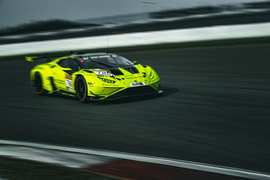 The Aston Martin Valkyrie represents the British interpretation of a Formula One-derived driving experience. It deliberately eschews Aston Martin’s traditional commitment to providing powerful yet refined grand touring comfort, opting instead for a singular focus on brutal, unadulterated performance. The development of the Valkyrie was a collaborative endeavor with the supremely successful Red Bull Formula One team and their star aerodynamicist, Adrian Newey. Propulsion is provided by a 6.5-liter V12 engine augmented with electric assistance, delivering a staggering 220 mph top speed. As Aston Martin themselves aptly put it, \”any faster and it would fly,\” underscoring the extreme aerodynamic optimization of the chassis.
Gordon Murray Automotive T.50: A Return to Analog Purity
In stark contrast to the ostentatious aerodynamic appendages seen on many of its contemporaries, Gordon Murray’s T.50 presents a surprisingly subtle aesthetic. This V12-engined supercar champions a refreshingly analogue driving philosophy, a rarity in our digitally saturated era. The T.50 features a traditional manual transmission and eschews electrical augmentation for its Cosworth-designed and built engine. Murray’s genius is evident in the intricate underbody and through-body aerodynamics, which work in concert with the car’s formidable power—approximately 650 horsepower—to achieve a top speed of 226 mph. The prerequisite for experiencing this mechanical symphony is a sum of $2.8 million USD.
Pagani Utopia: A Masterclass in Exquisite Engineering
The latest creation from the fervent imagination of Horacio Pagani, the Utopia, made its official debut at the prestigious Goodwood Festival of Speed. Powering this automotive marvel is a Mercedes-Benz sourced V12 engine, a hallmark of Pagani’s previous super-fast supercars. However, the Utopia distinguishes itself with the integration of twin turbochargers, boosting output to a remarkable 852 horsepower. While road testers have yet to get their hands on an example, and with only 99 units slated for production, there is still time to contemplate the $1.7 million price tag that would secure one’s place in this exclusive club. The top speed of its predecessor, the Huayra, was an impressive 238 mph, leading us to anticipate an even more exhilarating figure from the Utopia.
Rimac Nevera: Electrifying Croatian Innovation
The Rimac Nevera is a wild, electrifying supercar conceived by the Croatian electric vehicle specialists at Rimac—the same company that provides the underlying powertrain technology for the Pininfarina Battista. The vehicle’s evocative name is inspired by the Mediterranean storms that frequently lash the Croatian coast. As Rimac eloquently puts it, \”a Nevera is extremely powerful and charged by lightning.\” The Nevera’s rear wing is an active component, adjusting at high speeds and also serving as an effective air brake should the driver need to decelerate rapidly from its staggering 256 mph top speed. The acquisition cost is approximately $2 million USD, though one might find themselves frequently explaining the innovative badge at local pubs.
Bugatti Bolide: The Ultimate Farewell to an Icon
The Bugatti Bolide represents the latest act of audacious engineering from the French marque, serving as the ultimate swansong for their world-beating 8-liter W16 engine. This gargantuan powerplant produces a monstrous 1,824 horsepower in this track-focused configuration. The Bolide’s design is said to draw inspiration from the latest generation of Le Mans-winning LMP1 prototype racers, with a height identical to that of a somewhat earlier, albeit significantly slower, Bugatti—the iconic 1930s Type 57C. Production will be strictly limited to just 40 examples, with a projected top speed of 311 mph available to those prepared to part with the $3.4 million cost. For the less financially endowed, Bugatti has also released a Lego version of the Bolide, offering a more accessible entry point into the world of hypercar admiration.
The Aston Martin Valkyrie represents the British interpretation of a Formula One-derived driving experience. It deliberately eschews Aston Martin’s traditional commitment to providing powerful yet refined grand touring comfort, opting instead for a singular focus on brutal, unadulterated performance. The development of the Valkyrie was a collaborative endeavor with the supremely successful Red Bull Formula One team and their star aerodynamicist, Adrian Newey. Propulsion is provided by a 6.5-liter V12 engine augmented with electric assistance, delivering a staggering 220 mph top speed. As Aston Martin themselves aptly put it, \”any faster and it would fly,\” underscoring the extreme aerodynamic optimization of the chassis.
Gordon Murray Automotive T.50: A Return to Analog Purity
In stark contrast to the ostentatious aerodynamic appendages seen on many of its contemporaries, Gordon Murray’s T.50 presents a surprisingly subtle aesthetic. This V12-engined supercar champions a refreshingly analogue driving philosophy, a rarity in our digitally saturated era. The T.50 features a traditional manual transmission and eschews electrical augmentation for its Cosworth-designed and built engine. Murray’s genius is evident in the intricate underbody and through-body aerodynamics, which work in concert with the car’s formidable power—approximately 650 horsepower—to achieve a top speed of 226 mph. The prerequisite for experiencing this mechanical symphony is a sum of $2.8 million USD.
Pagani Utopia: A Masterclass in Exquisite Engineering
The latest creation from the fervent imagination of Horacio Pagani, the Utopia, made its official debut at the prestigious Goodwood Festival of Speed. Powering this automotive marvel is a Mercedes-Benz sourced V12 engine, a hallmark of Pagani’s previous super-fast supercars. However, the Utopia distinguishes itself with the integration of twin turbochargers, boosting output to a remarkable 852 horsepower. While road testers have yet to get their hands on an example, and with only 99 units slated for production, there is still time to contemplate the $1.7 million price tag that would secure one’s place in this exclusive club. The top speed of its predecessor, the Huayra, was an impressive 238 mph, leading us to anticipate an even more exhilarating figure from the Utopia.
Rimac Nevera: Electrifying Croatian Innovation
The Rimac Nevera is a wild, electrifying supercar conceived by the Croatian electric vehicle specialists at Rimac—the same company that provides the underlying powertrain technology for the Pininfarina Battista. The vehicle’s evocative name is inspired by the Mediterranean storms that frequently lash the Croatian coast. As Rimac eloquently puts it, \”a Nevera is extremely powerful and charged by lightning.\” The Nevera’s rear wing is an active component, adjusting at high speeds and also serving as an effective air brake should the driver need to decelerate rapidly from its staggering 256 mph top speed. The acquisition cost is approximately $2 million USD, though one might find themselves frequently explaining the innovative badge at local pubs.
Bugatti Bolide: The Ultimate Farewell to an Icon
The Bugatti Bolide represents the latest act of audacious engineering from the French marque, serving as the ultimate swansong for their world-beating 8-liter W16 engine. This gargantuan powerplant produces a monstrous 1,824 horsepower in this track-focused configuration. The Bolide’s design is said to draw inspiration from the latest generation of Le Mans-winning LMP1 prototype racers, with a height identical to that of a somewhat earlier, albeit significantly slower, Bugatti—the iconic 1930s Type 57C. Production will be strictly limited to just 40 examples, with a projected top speed of 311 mph available to those prepared to part with the $3.4 million cost. For the less financially endowed, Bugatti has also released a Lego version of the Bolide, offering a more accessible entry point into the world of hypercar admiration.
 The Evolving Landscape of