



The Apex Predators: Ranking the World’s 10 Fastest Supercars in 2026
Welcome to the rarefied atmosphere where 200 mph is merely the price of admission. In the relentless pursuit of ultimate velocity, the world’s premier hypercar manufacturers treat anything less than a three-digit sprint as mere dawdling. These are machines forged from carbon fiber and obsession, sold not just as vehicles, but as rolling sculptures to an elite clientele who often garage them next to works by Picasso and Rembrandt. The ultimate question, however, remains: will these titans of speed ever be truly unleashed on asphalt, or are they destined to exist solely as shimmering museum pieces?
Having spent a decade immersed in the guttural roar of V12s and the silent surge of electric hyper-performance, I can attest that the allure of these machines goes far beyond the spec sheet. It’s about the audacity of engineering, the historical lineage, and the tantalizing possibility of experiencing physics at its absolute limit. Join me as we dissect the pinnacle of automotive engineering—the world’s fastest supercars in 2026.
The Reigning Champion: Rimac Nevera
Croatia’s Electric Juggernaut Shatters Records
In the hypercar landscape of 2026, the debate over internal combustion versus electrification has effectively ended at the absolute top end. The Rimac Nevera, hailing from the coastal nation of Croatia, stands as the definitive proof that electric powertrains now dominate the realm of ultimate speed. Named after a Mediterranean storm, the Nevera embodies raw, untamed power, delivered with a precision that borders on the supernatural.
This isn’t just a fast car; it’s a technological marvel. Housing four independent electric motors—one dedicated to each wheel—the Nevera produces a staggering 1,914 horsepower and 1,741 lb-ft of torque. This quad-motor setup allows for torque vectoring so sophisticated it can seemingly defy the laws of physics, pulling the car through corners with a tenacity that leaves traditional mechanical grip limits in the dust.
 But the statistics are what truly cement its legendary status. In 2025, the Nevera achieved what many thought impossible: a 261 mph (421 km/h) top speed, officially making it the fastest production electric car in the world. More impressively, it decimated 23 acceleration and braking records in a single day, including the 0-60 mph sprint in a mind-bending 1.74 seconds and the quarter-mile in a scarcely believable 8.25 seconds.
For the discerning buyer in 2026, the Nevera represents the apex of automotive evolution. It offers the visceral thrill of a hypercar with the eco-conscious credentials that are increasingly important to the modern billionaire collector. While the price tag of approximately $2.4 million might seem steep, it’s a bargain when you consider the engineering prowess and the history-making performance contained within its sleek carbon fiber chassis. The Nevera isn’t just participating in the future of speed; it is defining it.
The Final Act: Bugatti Bolide
Chiron’s Track-Only Swan Song Reaches Unprecedented Speeds
For decades, Bugatti has been synonymous with the ultimate expression of automotive excess. The Chiron and its variants have defined the top speed landscape for a generation. However, with the Bugatti Bolide, the French marque is delivering one final, seismic statement before the inevitable transition to electrification. This is not a road car; it is a Le Mans prototype with a license plate, a machine stripped bare to its most elemental form: pure speed.
Powered by the legendary 8.0-liter quad-turbocharged W16 engine—a powertrain that has become automotive folklore—the Bolide unleashes a colossal 1,824 horsepower in its track-optimized configuration. This immense power is channeled through a chassis that prioritizes aerodynamic efficiency above all else. The exterior is a symphony of functional design, featuring a dramatic roof scoop, massive rear diffuser, and active aerodynamic elements that can adjust in milliseconds to optimize downforce or minimize drag.
While Bugatti has remained characteristically elusive about the Bolide’s absolute top speed on a high-speed oval, internal testing and simulations suggest a figure that borders on the mythical. Most industry insiders predict the Bolide is capable of exceeding 270 mph (434 km/h), potentially nudging even higher given the right conditions and driver bravery.
The exclusivity of the Bolide is staggering. Bugatti plans to produce just 40 examples, each carrying a price tag approaching $4.7 million. This isn’t a car you buy; it’s an investment in history. For the collector seeking the ultimate track weapon and the final word in W16 engineering, the Bolide represents an opportunity that will never come again. It is the end of an era, and it is going out with a roar heard around the world.
The F1 Hybrid: Mercedes-AMG ONE
Lewis Hamilton’s Influence Manifests in 1,063 Horsepower of Track Dominance
Few road cars can claim a lineage as direct to Formula 1 as the Mercedes-AMG ONE. This audacious project, born from the mind of AMG’s top brass and refined with the invaluable input of seven-time World Champion Lewis Hamilton, represents the most direct translation of F1 technology to public roads ever attempted. The result is a hybrid hypercar that blurs the line between racetrack and boulevard.
At its heart lies a bespoke 1.6-liter turbocharged V6 engine, the very heart of a championship-winning F1 car. But this is no mere transplant. It is augmented by four electric motors, providing an electric-only range of approximately 11 miles and instantaneous torque that fills the gaps in the combustion engine’s power band. The combined output is a mind-bending 1,063 horsepower, delivered with the precision and responsiveness of a race car.
But the statistics are what truly cement its legendary status. In 2025, the Nevera achieved what many thought impossible: a 261 mph (421 km/h) top speed, officially making it the fastest production electric car in the world. More impressively, it decimated 23 acceleration and braking records in a single day, including the 0-60 mph sprint in a mind-bending 1.74 seconds and the quarter-mile in a scarcely believable 8.25 seconds.
For the discerning buyer in 2026, the Nevera represents the apex of automotive evolution. It offers the visceral thrill of a hypercar with the eco-conscious credentials that are increasingly important to the modern billionaire collector. While the price tag of approximately $2.4 million might seem steep, it’s a bargain when you consider the engineering prowess and the history-making performance contained within its sleek carbon fiber chassis. The Nevera isn’t just participating in the future of speed; it is defining it.
The Final Act: Bugatti Bolide
Chiron’s Track-Only Swan Song Reaches Unprecedented Speeds
For decades, Bugatti has been synonymous with the ultimate expression of automotive excess. The Chiron and its variants have defined the top speed landscape for a generation. However, with the Bugatti Bolide, the French marque is delivering one final, seismic statement before the inevitable transition to electrification. This is not a road car; it is a Le Mans prototype with a license plate, a machine stripped bare to its most elemental form: pure speed.
Powered by the legendary 8.0-liter quad-turbocharged W16 engine—a powertrain that has become automotive folklore—the Bolide unleashes a colossal 1,824 horsepower in its track-optimized configuration. This immense power is channeled through a chassis that prioritizes aerodynamic efficiency above all else. The exterior is a symphony of functional design, featuring a dramatic roof scoop, massive rear diffuser, and active aerodynamic elements that can adjust in milliseconds to optimize downforce or minimize drag.
While Bugatti has remained characteristically elusive about the Bolide’s absolute top speed on a high-speed oval, internal testing and simulations suggest a figure that borders on the mythical. Most industry insiders predict the Bolide is capable of exceeding 270 mph (434 km/h), potentially nudging even higher given the right conditions and driver bravery.
The exclusivity of the Bolide is staggering. Bugatti plans to produce just 40 examples, each carrying a price tag approaching $4.7 million. This isn’t a car you buy; it’s an investment in history. For the collector seeking the ultimate track weapon and the final word in W16 engineering, the Bolide represents an opportunity that will never come again. It is the end of an era, and it is going out with a roar heard around the world.
The F1 Hybrid: Mercedes-AMG ONE
Lewis Hamilton’s Influence Manifests in 1,063 Horsepower of Track Dominance
Few road cars can claim a lineage as direct to Formula 1 as the Mercedes-AMG ONE. This audacious project, born from the mind of AMG’s top brass and refined with the invaluable input of seven-time World Champion Lewis Hamilton, represents the most direct translation of F1 technology to public roads ever attempted. The result is a hybrid hypercar that blurs the line between racetrack and boulevard.
At its heart lies a bespoke 1.6-liter turbocharged V6 engine, the very heart of a championship-winning F1 car. But this is no mere transplant. It is augmented by four electric motors, providing an electric-only range of approximately 11 miles and instantaneous torque that fills the gaps in the combustion engine’s power band. The combined output is a mind-bending 1,063 horsepower, delivered with the precision and responsiveness of a race car.
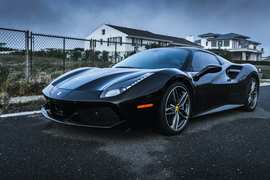 The aerodynamic package is equally derived from F1 principles. Active aero elements, including a deployable rear wing and louvers on the front wheel arches, work in concert with the car’s sculpted body to generate massive downforce. This allows the ONE to corner at speeds that defy belief, while its electronically limited top speed of 219 mph (352 km/h) is more than sufficient for any public road.
The development of the ONE was famously arduous, plagued by the engineering challenges of making an F1 powertrain road-legal and emissions-compliant. Yet, Mercedes-AMG persevered, delivering a machine that is as much a testament to human ingenuity as it is to automotive performance. With a production run limited to just 275 units and a price tag of around $3 million, the ONE is more than a car—it’s a rolling piece of Formula 1 history.
The British Masterpiece: Aston Martin Valkyrie
Adrian Newey’s Aerodynamic Genius Unleashed
When Adrian Newey, the legendary chief technical officer of Red Bull Racing, lends his name to a road car, the automotive world listens. The Aston Martin Valkyrie is the physical manifestation of his racing philosophy: a car where aerodynamics and weight reduction are prioritized above all else, resulting in a vehicle that feels more like a Le Mans prototype than a road-legal machine.
The Valkyrie’s design is breathtaking in its audacity. With its skeletal frame and dramatic open-wheel inspired aerodynamics, it looks as though it has been sculpted by the wind itself. This isn’t merely for aesthetics; every curve, vent, and wing serves a purpose, generating an astonishing amount of downforce that allows the car to corner at speeds that would humble even the most capable track cars.
Powering this British beast is a naturally aspirated 6.5-liter V12 engine developed by Cosworth. This screaming masterpiece redlines at a stratospheric 11,100 rpm, producing 1,000 horsepower on its own. When combined with the KERS-style hybrid system, the total output reaches approximately 1,160 horsepower.
The Valkyrie’s performance is nothing short of staggering. While its top speed is electronically limited to around 220 mph (354 km/h), its true magic lies in its mid-range acceleration and cornering prowess. It’s a car that rewards driver skill, offering an unfiltered, visceral connection to the road that is increasingly rare in the modern era of electronic aids. With a price tag of around $3.2 million and a production run of only 150 units, the Valkyrie is a rolling sculpture that happens to be one of the fastest cars ever built.
The Italian Artisan: Pagani Utopia
Horacio Pagani’s Return to Analog Purity
In a world increasingly dominated by electric powertrains and digital interfaces, Horacio Pagani has made a bold statement with the Pagani Utopia. This exquisite machine represents a return to the roots of the supercar, prioritizing the visceral thrill of the driving experience over outright lap times. Yet, despite its analog soul, the Utopia is undeniably one of the fastest cars in the world.
The aerodynamic package is equally derived from F1 principles. Active aero elements, including a deployable rear wing and louvers on the front wheel arches, work in concert with the car’s sculpted body to generate massive downforce. This allows the ONE to corner at speeds that defy belief, while its electronically limited top speed of 219 mph (352 km/h) is more than sufficient for any public road.
The development of the ONE was famously arduous, plagued by the engineering challenges of making an F1 powertrain road-legal and emissions-compliant. Yet, Mercedes-AMG persevered, delivering a machine that is as much a testament to human ingenuity as it is to automotive performance. With a production run limited to just 275 units and a price tag of around $3 million, the ONE is more than a car—it’s a rolling piece of Formula 1 history.
The British Masterpiece: Aston Martin Valkyrie
Adrian Newey’s Aerodynamic Genius Unleashed
When Adrian Newey, the legendary chief technical officer of Red Bull Racing, lends his name to a road car, the automotive world listens. The Aston Martin Valkyrie is the physical manifestation of his racing philosophy: a car where aerodynamics and weight reduction are prioritized above all else, resulting in a vehicle that feels more like a Le Mans prototype than a road-legal machine.
The Valkyrie’s design is breathtaking in its audacity. With its skeletal frame and dramatic open-wheel inspired aerodynamics, it looks as though it has been sculpted by the wind itself. This isn’t merely for aesthetics; every curve, vent, and wing serves a purpose, generating an astonishing amount of downforce that allows the car to corner at speeds that would humble even the most capable track cars.
Powering this British beast is a naturally aspirated 6.5-liter V12 engine developed by Cosworth. This screaming masterpiece redlines at a stratospheric 11,100 rpm, producing 1,000 horsepower on its own. When combined with the KERS-style hybrid system, the total output reaches approximately 1,160 horsepower.
The Valkyrie’s performance is nothing short of staggering. While its top speed is electronically limited to around 220 mph (354 km/h), its true magic lies in its mid-range acceleration and cornering prowess. It’s a car that rewards driver skill, offering an unfiltered, visceral connection to the road that is increasingly rare in the modern era of electronic aids. With a price tag of around $3.2 million and a production run of only 150 units, the Valkyrie is a rolling sculpture that happens to be one of the fastest cars ever built.
The Italian Artisan: Pagani Utopia
Horacio Pagani’s Return to Analog Purity
In a world increasingly dominated by electric powertrains and digital interfaces, Horacio Pagani has made a bold statement with the Pagani Utopia. This exquisite machine represents a return to the roots of the supercar, prioritizing the visceral thrill of the driving experience over outright lap times. Yet, despite its analog soul, the Utopia is undeniably one of the fastest cars in the world.
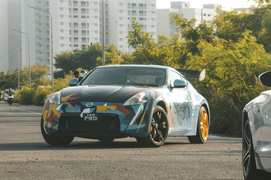 Named after the philosophical concept of a perfect society, the Utopia is a testament to Pagani’s unwavering commitment to craftsmanship and design. Eschewing carbon fiber monocoques for a lighter Carbo-Titanium composite chassis, the Utopia maintains a featherlight curb weight of just 2,822 pounds. This obsessive attention to detail is evident in every curve